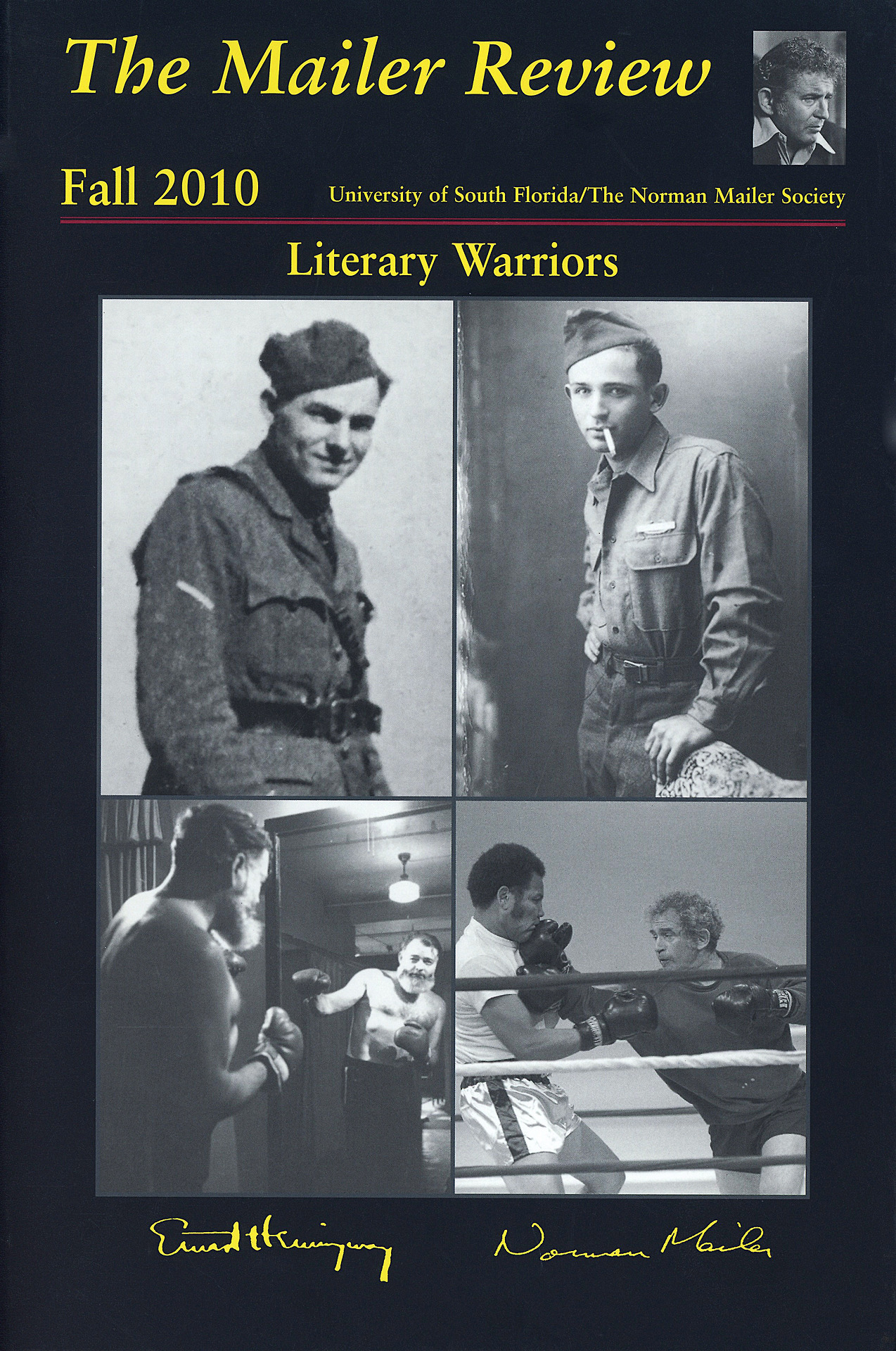
Authorship and Alienation in Death in the Afternoon and Advertisements for Myself
Keywords:
Ernest Hemingway, Advertisements for Myself, authorship and alienation, literary celebrity, genre hybridity, authorial identityAbstract
Ernest Hemingway and Norman Mailer each strove to achieve lasting success and power as novelists, yet two of their most revealing and thus interesting works in no way qualify as novels. These works, Death in the Afternoon (1932) and Advertisements for Myself (1959), occur at almost precisely the same point in their careers—after initial critical success for quasi-autobiographical war novels, after the consequent achievement of celebrity, and after a major disappointment when that celebrity alone was not enough to overcome the restrictive vicissitudes of their respective moments in publishing culture. Their stances in response to the writer/author alienation would initially differ thus: Hemingway saw this alienation as a paradox and sought to eliminate it through force of will and pedantry. Mailer, having learned from Hemingway, embraced the paradox and gave it center stage.