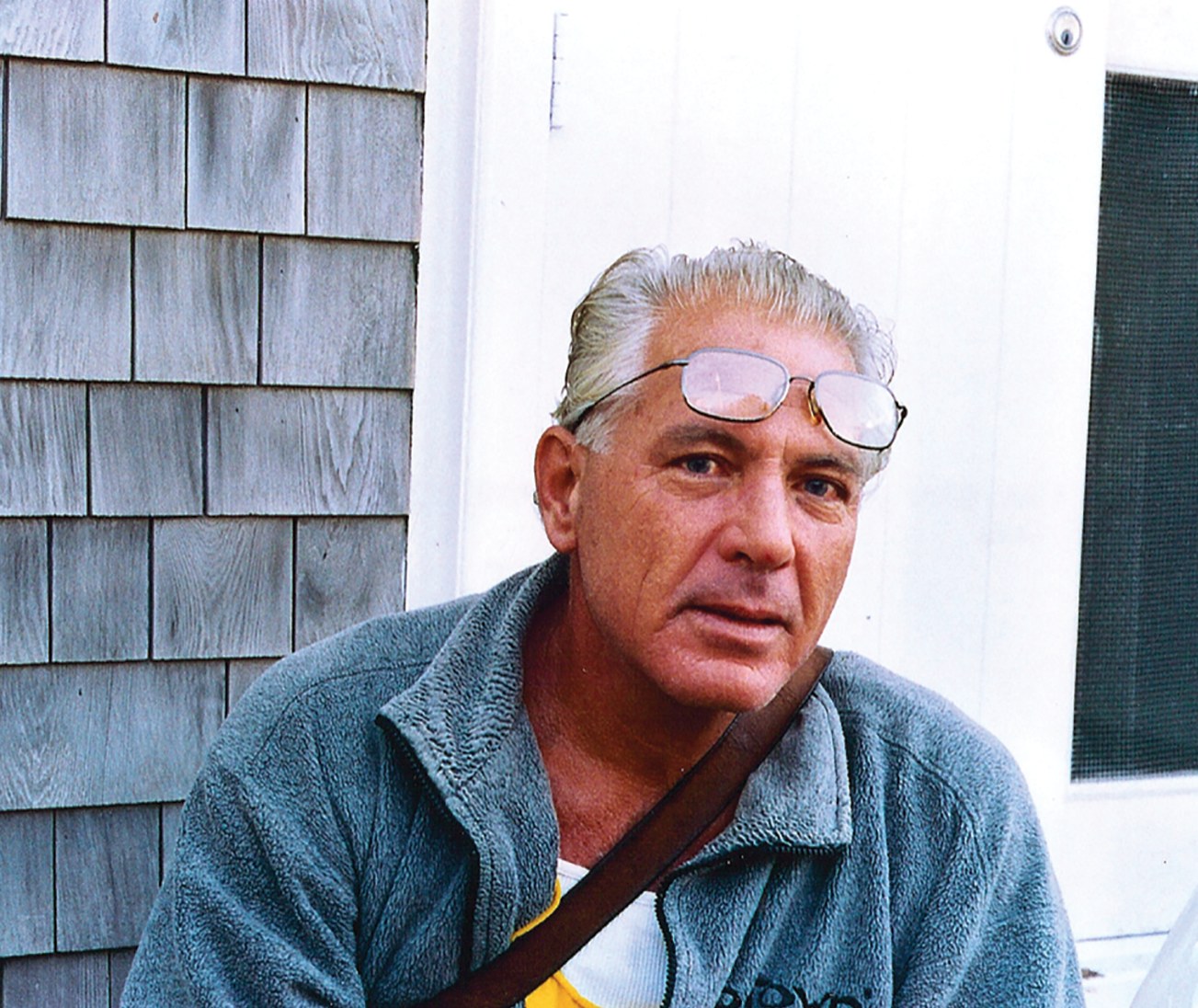
I first met Chris back in the summer of 1969 or ’70, when I was 14. He was in his early 20s then, the pro at the Provincetown Yacht and Tennis club (which, to be sure, seemed somewhat lacking on the yacht front), and I was among a group of teenagers who were his young pupils. Back then Chris was one of the most gorgeous humans I’d ever seen, a Greek god of a man, with tousled curls and a muscular and burnished body. As a tennis teacher, he was a near genius. Enthusiastic and funny, he had a way of articulating complicated physical actions, making them easy to understand and execute. I can still hear him explaining how to hit a forehand: “Pretend you’re spinning a globe with the flat of your hand, starting low in Australia, then brushing upward toward North America.” In addition to tennis, he offered life lessons and made the club a hangout for adolescents like me and Jackson Friedman and Dorne Huebler and Winthrop Watson. Chris was a joker with a wicked sense of humor and an infectious laugh. Once he found a weak spot, nothing delighted him more than to come back to it repeatedly—always with affection. It was sweet really. Endearing. Much later in our long tennis journey, when his excellent tutelage and the years had allowed me to catch up with him competitively, he would use whatever tricks he could to maintain an edge in our friendly rivalry. We were no longer student and teacher but friends. We talked about writing and literature and politics. Tennis was a much smaller part of the conversation. Now we just played. There was one winter in particular in the early 1990s when we played every afternoon until it got too cold, down on the hardcourts at the far reaches of the club. Chris decided the obscenities that I unleashed upon missing an easy shot were actually a sign of Tourette’s Syndrome. The thought of this tickled him no end, and forever after, whenever I lost my cool on the court, he would remind me that I was having an episode, calling me a bastardized version of the insufferably pretentious pen name I had used in college—P. Harper Alson—gleefully yelling out Pee Pecker Alson as if he, too, could not help himself. It’s funny that that’s what I should think of now. We had so many deep and meaningful conversations over the years, but it is the silly parts of Chris that I find myself missing right now in this very dark season. I’d give a lot to hear his mischievous laugh once more.