This interview was conducted on October 31, 2020. Maggie McKinley is the President of The Norman Mailer Society.
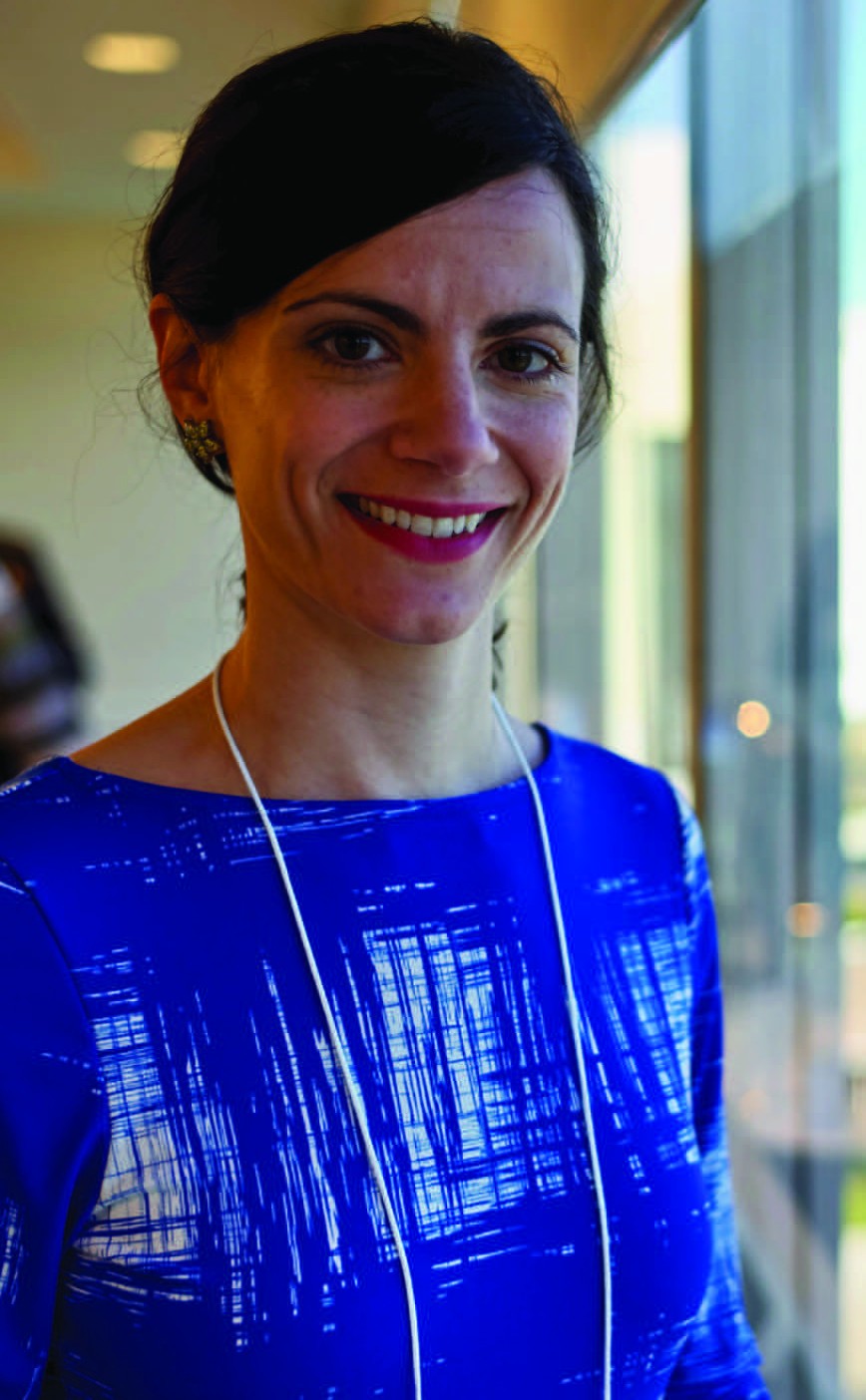
Phillip Sipiora: Thank you, Maggie, for your time and energy today for participating in this interview. Our readers are particularly interested in your work as a major scholar and, of course, in your role as president of the Norman Mailer Society.
One focus of our interview is “a scholarly life,” so I would like to begin by asking about your research interests and background. You have had a relatively long interest in contemporary authors such as Philip Roth, Norman Mailer, Saul Bellow, Richard Wright, James Baldwin, and others. What intellectual and other interests drew you early on to these 20th century writers and did your interest begin as an undergraduate student?
Maggie McKinley: Well, my interest in these writers began largely when I was a graduate student. The subjects of my dissertation evolved overtime, but Mailer was on my early list of authors. At first, I thought I was going to write my dissertation on New Journalism, so my initial interest in Mailer was more focused on that part of his writing career. I specifically thought that I was going to do a project on Mailer, Wolfe, Didion and Thompson—and I do have plans to return to that topic at some point in the future—but as I was reading An American Dream, I became more interested in Mailer’s fiction, and particularly in the way he wrote about violence. As I was shaping my dissertation topic, I was also reading Charles Bukowski and Richard Yates and so I was thinking quite a bit about the topic of masculinity in addition to violence. And, of course, the more you study something, the more invested you become, and I think that’s why, once I really delved into these authors’ canons, I developed a lasting interest not only in their representations of masculinity, but in other elements of their writing as well.
Sipiora: Did your project change significantly over its development? Having directed many dissertations, I know that frequently the end product is sometimes not fully connected to the original plan. Did that happen to you?
McKinley: After I had set aside the primary focus on New Journalism, the list of authors changed more than anything. I knew very early on that it was going to be a project on masculinity and violence, as those were the topics that were most intriguing to me, and I felt that there was significant value in studying them. But then I started to think more about what I wanted to say about masculinity and its intersections with race and ethnicity, and that’s when the project shifted to focus on Black and Jewish authors. This helped ground and structure my study, too, since there was already an existing field of study centering on Black and Jewish literary conversations and historical alliances.
Sipiora: Thank you, Maggie, for that personal history. When did you first meet Norman Mailer? I recall his last major public appearance at Austin, Texas at the Harry Ransom Research Center for the dedication of his archives in 2006 which, by the way, was when Norman gave his blessing to the launch of The Mailer Review.
McKinley: I never had the chance to meet him, sadly. I had never read any Mailer in my undergraduate education, and I think that I was only vaguely aware of who he was until I started working on my Masters degree. That’s really when I started researching him; and I actually completed some of my first graduate level work on Mailer in 2007, just months before he passed away.
Sipiora: I think that you would have liked Norman very much at the personal level as well as connecting with him as a major artist and I’m sure that he would have been very interested in you and your work. I do remember your appearance at the Mailer conference in Austin in 2011. Your interest in Norman Mailer has been formidable considering the fact that you already have two books on Mailer, not including your forthcoming edited volume, Mailer in Context, (Cambridge University Press, 2021). Your scholarly work is astounding for a relatively young scholar and this production goes back to something that you addressed briefly earlier, but perhaps you could delve a little deeper into your scholarly interest, particularly in Mailer, as opposed to your scholarly interest in the topics that you focused upon.
McKinley: In short, I think once I dove deeply into Mailer’s body of work, I realized how much there was to say about him, and so part of my interest in him stems from the diversity of his texts, topics, and themes. I never have any trouble coming up with a new idea for something to research and write about. There is so much there to be mined and, compared to other contemporary American writers, relatively little recent literary criticism on his work, so there are all these doors to walk through. And the deeper I get into a particular subject or text, the more I find to uncover. Every time I set out to write something or study something new about his work, I end up unearthing something that I hadn’t even thought of before.
My involvement in the Mailer Society fuels much of my scholarship as well. When I first discovered the Society and attended a conference that first time in Austin, I could tell right away that it was a unique group of very passionate people. I think the Mailer Society is different from many other literary societies, which are less intimate, and where there’s less continuity of discussion. I feel that each year at the Mailer conference, we are picking up a conversation that we started in previous years, which makes it much easier and more fun to pursue Mailer scholarship. As I work on a project, I know that there is always this resource, this group of people that I can bounce ideas off of and who can provide some inspiring new material for study as well.
Sipiora: I have experienced the same collegiality in our Society and I think that the atmosphere of our conferences and the openness toward new scholarship can be attributed, in large part, to your efforts. You set a very comfortable (and comforting) atmosphere for new scholars and this tone makes a huge difference, both in the short term and the long term. I sometimes receive manuscripts, based on papers given at our conference, from graduate students or recent graduates and they often say that they feel quite relaxed at our meetings. I recall my days as a graduate student when I found myself sitting in a room with people who had written books on Eliot, Hemingway, or Fitzgerald. It was intimidating.
Before we dig a little deeper into your work on Mailer, I would like to ask you about your scholarly interest in Philip Roth, about whom you have also written extensively. I know that you are very active in a leadership capacity in the Roth Society.
McKinley: Philip Roth is definitely another literary love of mine. And I think initially, my interest in him was largely focused, again, around the topic of masculinity in his work. Roth just seemed such a perfect fit into my early research. Over time, though, I have grown to love new and different things about his work. In particular, I love Roth’s dark sense of humor and the way he applies it to his various alter egos. I think he knew that he had a reputation of being sort of a masculinist author, as a result of his dominant focus on the lives—particularly the sexual lives—of male characters. He was subjected to some of the same kinds of criticism that Mailer’s work received along those lines, and has been referred to as sexist and misogynist. But I have such a different reaction to his writing. It would be foolish, of course, to argue that his books aren’t about masculinity. They are: his protagonists are men and they are consciously concerned with the development and reception of their masculine identities. But Roth’s work is about so much more. He offers some of the most beautiful comments on humanity—the hilarity, tragedy, and magnificence of being human—wrapped up in his long, winding sentences. The more that I read by him the more I appreciate his craft.
The Philip Roth Society is not quite the same as the Mailer Society in terms of the frequency of our gatherings, yet it is also a very welcoming, encouraging, passionate group of individuals, which has inspired my ongoing interest in Roth. I appreciate being part of a group where I can have conversations with people who share my interests, and where we support each other and collaborate rather than try and elbow each other out of the scholarly field.
Sipiora: Thank you. My follow up is a larger question, but maybe we could trim it to one or two of the most important connections between Roth and Mailer that have attracted your scholarly interest. Which issues would you prioritize?
McKinley: What has always interested me is the ways their male protagonists reflect larger social anxieties about gender, which is what interests me about the work of many authors that I write about. But I think that Mailer and Roth are also both honest and vulnerable authors, or perhaps it would be more accurate to say that they are able to make their characters incredibly vulnerable. And I think that this vulnerability becomes a fascinating dimension of the representations of masculinity in their work. This is why it’s sometimes surprising to me how negatively people react to their protagonists, because to just see them as egotistical, macho, misogynist, sexist characters is overlooking that vulnerability. This is true of Mailer and particularly true of Roth, whose Nathan Zuckerman is always tripping over himself and acknowledging his own flaws.
Sipiora: That’s great. One of the things that attracted me to Roth, whom I have taught for a long time, is precisely what you’re saying. His characters don’t appear anywhere else: they are complicated, idiosyncratic, and highly contoured. My students are very interested in analyzing them.
If we could turn back to your germinal book on masculinity and violence (Masculinity and the Paradox of Violence in American Fiction, 1950–1975, Bloomsbury Academic Publishing, 2015), your theoretical template relies on the influential work of Simone de Beauvoir and Hannah Arendt in their relevance to existentialism. Were you tempted to dig deeper into 20th century philosophical movements, which may include Heidegger, Levinas and some of the other important phenomenologists? Or did you feel that your focus was essentially existential and you felt more comfortable in going with the leaders of that movement rather than perhaps getting bogged down in the complicated philosophical movements over the last century?
McKinley: That’s a good question. I would have to say it’s the latter. I did recognize that there was an opportunity to dig deeper into those philosophies and certainly they would have been relevant in a variety of ways. However, I was concerned that the dissertation, and then eventually the book, would become too huge and unmanageable. So, part of my goal in incorporating that existential theory and using it as a foundation was to help focus and distill the literary analysis. To incorporate too much and to examine all of the relative contextual, theoretical nuances would actually obscure some of what I was trying to argue about the actual literature. So I chose to keep the focus narrow, centering on the French existentialists and using their work as the underpinning for the analysis.
Sipiora: As a reader, that makes perfect sense to me. And I think that you focus on them in expansive ways that allow entre to a compelling matrix of interpretation(s). Turning back to Mailer and masculinity, can you identify one or two of the most salient theoretical dimensions of masculinity that interest you and inform your Mailer scholarly work?
McKinley: Let me answer that by first saying that I think when it comes to masculinity studies, which is a very interdisciplinary field in and of itself, I am most drawn to the sociological approaches. In my work I frequently refer to some of the classic theorists like R.W. Connell and her study of hegemonic masculinity. I am also indebted to the work of Gail Bederman and Michael Kimmel, scholars who have long been examining the sociological and historical underpinnings, origins, and structures of masculinity in America. So when it comes to Mailer, I am most interested in how his fiction and, in some cases his nonfiction, reflect some of the observations made by these sociologists who are examining how and why a certain kind of masculine performance has maintained a dominant hold on our society, when and where that becomes troubled, who troubles it, and how that may feel threatening to the people who hold power or who adhere to that dominant ideology.
More than one chapter in Mailer in Context touches on some of these issues. My interest in masculinity theory and its sociological dimensions is also partly why taking on that project seemed so appealing to me. I’m interested in the social and historical context of literature, which is emphasized by the Cambridge Literature in Context series as a whole, and is incredibly valuable when looking at works by a writer like Norman Mailer, who was such an integral part of American culture for so many years.
Sipiora: I know that you have assembled a large number of important contributors for Mailer in Context, and I eagerly anticipate the publication of the volume. I think that it will be well received. In turning from masculinity to violence, can you briefly summarize some of the theoretical bases of your interest in violence in Mailer?
McKinley: In my first book, I made an argument about the existence of a “paradox of violence” in mid 20th century American fiction. In short, I noted a trend where the male characters in a variety of texts were using violence in order to maintain or uphold a certain kind of masculinity they thought would bring them a greater sense of power. But, actually, the violence ended up undoing them, making them feel less powerful and delivering a range of negative consequences. My critical intervention in these texts was to argue that this paradox revealed an underlying criticism of violence and hegemonic masculinities. When I was looking for theoretical groundwork to help me explain this phenomenon, I was drawn to Hannah Arendt because in my view she offers a very lucid explanation of the appeal of violence—for example, why people see it as a viable solution, either on an individual or social, systemic level—as well as the consequences of that violence.
Arendt published a very slim volume in 1970 called On Violence, where she lays out her theory. In some ways, the book touches on issues that other theorists of violence have addressed. For example, she explores why certain oppressed groups might use violence, which harkens back to the work of Frantz Fanon, who is also an important voice in my research on violence and race in literature. What I appreciate about Arendt here, though, is that she is very clear about her belief that violence ultimately becomes a vicious cycle. Violence will never completely end violence; it will only perpetuate it. This phenomenon appears in much of the fiction I write about, in that undoing of its protagonists, which is why I relied largely on her work as a solid grounding for my study of violence.
Sipiora: I think that you explicate Arendt in a way that is not only particularly useful, but also especially lucid. Unfortunately, only a few of my PhD students use Arendt, and one of the reasons is that they are challenged in understanding her and applying her. My reaction to your analysis of violence raises an issue about Mailer in general and An American Dream, in particular. I see your examination of the motif of violence in at least two strategic ways. First, as a close examination of scenic evidence in which violence comes forth as a consciously focused platform for narrative achievement, including thematic exposition, plot segmentation, and so forth.
The second manner involves the revelation of Mailer’s psychological inscape that is his confessional way of exploring issues of identity, society, gender relations, masculinity, and so forth, and you have very carefully integrated these modes of analysis. How much of an influence was J. Michael Lennon’s biographical treatment of Mailer (Norman Mailer: A Double Life. Simon & Schuster, 2013), in which Mailer always lives within the rubric of a double life. Do you see a bifurcated duality of perspective as representative of Mailer in his art as well as in his person, all inextricably intertwined?
McKinley: Thank you for the close reading and analysis of my work on violence. I appreciate that. And yes, Mike Lennon’s biography and his focus on that double life has certainly been invaluable to me as a scholar. Unfortunately, when I was writing the book on masculinity and violence, the biography was not available—it came out as I was finishing up my book. In answer to your question, I do see that duality in Mailer’s writing as well as his life. I think that that is what makes Mailer’s work difficult; in his creative nonfiction and his fiction, he will inhabit mindsets that can seem contradictory. And while that is challenging, I think it also shows his willingness to deeply investigate difficult issues and not to say dogmatically, for example, this is how violence operates or this is how violence is connected to gender. Rather, Mailer incisively investigates these topics with nuance. And this creates a wealth of material for a literary critic who wants to investigate the pieces of his various and sometimes contradictory or conflicting ideas about those big topics.
Sipiora: What you say reminds me of my interest in Mailer, including his literary and film criticism. I have struggled with this issue because sometimes we look at the techniques of a writer and we think of them as being part of a toolbox brought forth as needed and returned to the tool shed when done. I struggled with Mailer’s toolbox as I looked deeper into his creative and evaluative voice(s). I then came to the conclusion that this bifurcation, this duality, is inherently part of Mailer’s essential nature—and it has little to do with literature or film.
As Mike Lennon has pointed out in his tour de force biography, the double vision relates to women, to wives, to fiction, to anything, and Mailer was careful to address this nuanced alternative reality, sometimes coming forth in the clothing of dialectic in some of his discourse. So I’m very happy to hear that you, too, find that it is not just another literary stratagem, but rather it is reflective of the nature of the artist. And that’s what we have.
McKinley: Mailer was so heavily invested in the life of the mind and he constantly asked questions. To me, the emphasis on duality seems to arise naturally from that element of his personality and his intellectual pursuits. According to Mailer, when you think that you have figured something out, you ask another question because you probably have not figured things out. You probably haven’t examined the whole issue. You might be wrong about something. And I think that stance comes out in his work as he consistently follows this pattern. As a result, it also means that there’s probably always something to disagree with Mailer about, because he’s examining every side of an issue that he can possibly investigate, and people will inevitably take different stances, with or against him, depending on what part of that argument he happens to be inhabiting at the moment.
Sipiora: I love your phrase “at the moment”—so timely and apt. In my limited personal experience with Norman, I found that to be so true when we met in Austin in 2006. We were launching The Mailer Review and I had a discussion with him about the title. Norman said, well, it should be called The Norman Mailer Review. I was prepared for this moment and I said, “Norman, that’s not a good idea because it is disrespectful to you. It implies that no one knows who you are. Most of the other authors’ journals do not do that, especially those canonical figures with whom you share much in common, such as, The Hemingway Review, The Fitzgerald Review, Nabokov Studies, and so forth.” This discussion reminds me of what you said about Norman’s dedication to keep an open mind about things. And I just loved that about him. No matter what crazy ideas may come up, often he would listen and hear people out. I like to think that this openness was part of his connection to ancient traditions of rhetoric, dialectic, value theory. I believe that Mailer intuitively understood the importance of a fulsome examination of any topic.
Another topic that I think is very important is your discussion of paradox in Mailer, masculinity, and violence. It is clear when you analyze paradox as what “appears to be,” which I think is one of Mailer’s great strengths as a writer. As we know, paradox is a critical strategy that gained critical mass with the New Critics and it has never really left the critical dictionary. I wonder if you might comment a little more, perhaps in other areas of Mailer’s work? Is paradox one of those master tropes, like irony, for example, which is a powerful creative and writing strategy? Does paradox also create a context that provides a vehicle for penetrating interpretive insight?
McKinley: Yes, paradox can both be used as a literary device and something that offers broader insights. In Mailer, Roth, and the other writers that I study, paradox intersects with this duality or dialectic that we were speaking of. It can be represented in a self-contradictory statement that sounds as if it does not make sense, but when examined more fully, it allows space for contradictory ideas to exist side-by-side.
When I write about the paradox of violence, I am acknowledging the way that, in literature, and in larger society, men often deploy violence as a way to feel and seek more social power or self-confidence—and, in some cases, it is granted to them. And it is taught to them as a method to achieve this kind of power. But at the same time, violence removes some of that power and reveals their many vulnerabilities, rather than their many strengths. So, in a work like An American Dream, we see the protagonist, Stephen Rojack, reflect this in scenes that are controversial but also compelling. We see a certain strength or sense of rebirth when Rojack commits acts of violence that horrify us. But then we also see the consequences of those actions for Rojack. Ultimately, the things that he values are taken away from him and this is part of the ripple effect of his violence. And that doesn’t necessarily negate what Rojack thought he felt as a result of the violence or what he has been taught about violence or power as a man and in society. However, it does show the competing implications of this particular issue.
Sipiora: Thank you, Maggie, for your crisp, cogent explanation. Would you say, then, that the paradox extends to the reader, yet also to inferred understandings of issues within and outside of literature, so the paradox is not something that Mailer as writer is introducing us to, but rather it is always already there and the author articulates what must be examined? What do you think?
McKinley: That’s a tough question. I think that might possibly be the case. I don’t think Mailer is creating paradox entirely on his own. In terms of creating the characters who reveal paradoxes, then yes, it is his own invention. But, ultimately, paradox also exists in the way that I choose to read and what I bring to the text, and paradox is also revealed in our larger culture. So I wonder if I might split your question and say that Mailer creates scenarios with paradox and introduces them to the reader as literary tropes, but it is in the interest of highlighting something that already exists in our world.
Sipiora: I like that very much. It reminds me once again that Mailer, at least in my view, is at his best when he is speaks of the unsaid. He covered so many topics that were in the air but sometimes there was little intensive discussion, analysis, or evaluation. I have always seen Mailer’s mission as a public intellectual to open up these topics and areas for passionate interrogation. In his most enriching works, I think that this purpose comes through. His appearances on Firing Line with William F. Buckley, Jr. exemplified the “productive conflict” side of Mailer.
As we wind down, I’d like to turn back to your professional life beyond your passion for scholarship. You have been president of the Norman Mailer Society since 2017. And before that you served as vice president over the two preceding years. Can you tell us about the pluses and minuses of leading a society for a major writer? I know from my involvement with other societies that there are always things going on beneath the surface that the president must navigate and adjudicate. Can you address some of the dimensions of what you do as leader of the NM Society?
McKinley: I would say that a major plus is knowing that I am helping to facilitate these vital conversations that have meant so much to me as a scholar. It is important to me that the work of this particular unique society can continue. As a younger scholar, I feel that I have the time and energy to make sure that important issues are carried forth for future generations of scholars. And I hope to bring in new voices and do everything that I can to ensure that the interrogative work that Mailer endorsed continues on well into the future.
In terms of minuses, leading any sort of academic society often requires some boring minutiae: fielding a constant flow of emails, planning the logistics of our annual conference, and making sure meetings run smoothly. These particular details add to the workload and, as you know, academics these days are already stretched so thin, myself included. The challenge of making space for being president of the society in an already busy life is probably the only negative. But I think that seeing the fruits of that labor when we meet annually for the conferences and being able to connect with Mailer scholars in order to produce something like Mailer in Context makes everything incredibly worthwhile.
Sipiora: I think that the presidents of all societies are burdened with so much clerical work. I experience it in my own small role as editor of the journal. It’s just part of the nature of being committed to a professional society. And another issue that comes up is—presidents hear complaints. People are sometimes unhappy. It is simply part of the business. I guess that it’s just something that we have to live with.
McKinley: Yes, and I think that it is not unique to leading an academic society. As chair of the English department for the past three years, I have seen just how many different kinds of complaints can exist in the world. And so leadership involves learning to respond, gently, to colleagues’ anxieties and grievances, which are usually about something relatively minor. But in the case of the Mailer Society, on the bright side, at least the airing of concerns means members are involved.
Sipiora: I have one last question, Maggie, if you wouldn’t mind talking about it. I’m wondering if you might briefly discuss your anticipated future scholarly projects over the coming years?
McKinley: Sure. It’s no big secret. I’ve mentioned to many people that I’ve been working slowly, very slowly, on a project on Joan Didion for a few years now, whenever I’m on breaks from other projects, or during summers when I’m not teaching. I hope this project will be my next big piece of scholarship. About a year or two ago, I gave a paper on Mailer and Didion at the Northeast MLA conference, on The Deer Park and Play It as It Lays, two Hollywood novels. I definitely want to continue to pursue the connection between those two writers, beyond simply what they have said about each other’s work, focusing on some of the themes that they both address. But what I’m working on now in terms of Didion more specifically is a study of nostalgia in her body of work, which is a topic that fascinates me, probably in part because there is a contradiction, paradox, and duality within nostalgia. So that will certainly creep into this project.
Sipiora: Well, that is very interesting. I very much look forward to your work on Didion. I am sure that your scholarship will undoubtedly add valuable new insights into her body of work.
McKinley: Thank you for your vote of confidence. I was going to write more on Didion earlier and I’m glad that I waited because I think I was too close to her work, and it was too personal to me. As a scholar, I think it’s important to achieve a necessary distance from an author’s work to really turn a critical eye on it. While I still have a personal connection to Didion’s writing, ultimately I think it has been good to have the space of a decade to wait and then return to her.
Sipiora: Well, that’s wonderful. Many of us look forward to your future scholarship. Thank you so much, Maggie, for taking your time today to chat with me. Much to think about. Readers sometimes tell me that the interview section is one of the more important parts of the Review because it is a chance for them to come to know better those individuals at the center of Mailer Studies.
McKinley: Thanks, Phil.