This excerpt is Chapter 13 from In Another Place With and Without My Father, Norman Mailer (Northampton House Press, 2019).
My sister Kate was born in August of 1962. A few months before the end of that year, Dad and Jeanne had broken up. In a letter written to me earlier, in the summer, Dad had promised a family life, a home we would all share. He told me he’d bought a brownstone in Brooklyn Heights, remodeled it, and turned into a one-family home. Jeanne lived on the first floor, Dad on the fourth. I was promised a special bedroom on the third floor, a small independent studio apartment with a tiny kitchen and bathroom. According to Dad, Jeanne had decorated it especially for me. The walls were padded and covered with a floral cloth design in green, orange, and yellow.
But by the time I arrived in November, Jeanne had left Dad, taking the china and cutlery with her. Another of Dad’s favorite stories was how one evening he came home to find me upstairs on the fourth floor, alone as usual, sitting on the kitchen barstool, staring into space and sucking my thumb. Something I still did when I was feeling painfully unhappy.
He’d say, “I walk in and the first thing I see is Susie sucking her thumb. She barely looks up when I greet her. So, I get angry and say, ‘Susie! Take your goddam thumb out of yer mouth.’ She looks me in the eye and says, ‘Poor man, his woman left and took the dishes.’ ”
Every time he told the story he’d chuckle and add, “She’s a tough one, don’t mess with her.” Enjoying the quick jab.
I spent a lot of time alone in that apartment. My grandmother lived around the corner, so after school I’d drop in to visit and have dinner. Then I’d go home to an empty brownstone and wait for Dad. Sometimes he walked in before I went to bed and we tried to chat, but it was usually a stilted dialogue. We made a miserable pair. It clearly pained him to see me in such a sad state, but he was depressed himself and didn’t know how to deal with a gloomy thirteen-year-old.
Finally, getting annoyed, he’d say, “Susie, stop smelling your armpit! There’s nothing worse than self-pity.”
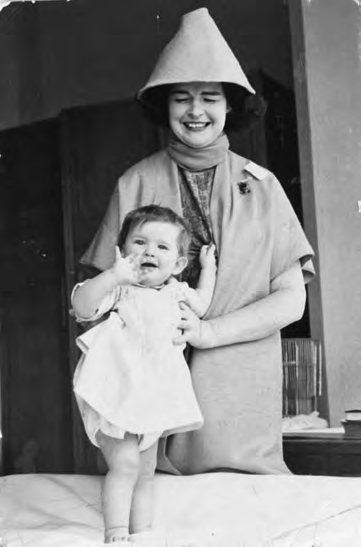
But most of the time he hung around the apartment for a while and then split as soon as he knew I was in bed.
I was so lonely it hurt.
Very soon after my arrival in mid-November, I entered eighth grade. Elizabeth Irwin High was what was then known as a progressive school. The white brick, five-story building on Charlton Street in Greenwich Village had classes for grades 7 to 12. Many intellectual and famous parents sent their kids to E.I.. Arlo Guthrie, Doon Arbus, and Bobby and Jane Miller went there. They were juniors and seniors, though, so as a lowly eighth grader I only caught an occasional glimpse of them. They were stars in the firmament, to be admired from afar. My classmates’ parents were mostly highly-educated, sophisticated professionals, so my father was probably the most famous parent in my class. But that didn’t make me feel any better.
It was very different from Albert Einstein Middle School. At E.I. we addressed our teachers by their first names, classes were small, and we were expected to think. For me, math was easy, but English was tough because I didn’t know the basics of writing. Not even how to write in paragraphs, let alone proper grammar.
All this was difficult, but what most concerned me was how to belong to the in crowd. A near impossible task to achieve for a latecomer to E.I., because most of my classmates had been there since kindergarten, and the cliques seemed to be set in steel. It wasn’t that they were nasty; they just ignored me. To make things worse, I’d arrived in the middle of the year.
I did make one friend, Eliana, a lonely girl like me. Her parents were originally from Spain, and she spoke Spanish, which brought us together. I liked her, and we spent lots of time together, but I had the nagging feeling we were the odd couple. I still wanted entrance to the cool kids’ circle.
One afternoon, near the end of 1962, I was once again sitting alone on the bar stool in the kitchen when Dad walked in earlier than usual, accompanied by a young, good-looking woman. He introduced us and then informed me, “She’ll be living here for a while.”
This second Jeannie was twenty-one and had just been discharged from Bellevue after a serious suicide attempt. She still had the bandages on her wrists. She and Dad had been friends for some time, perhaps casual lovers. Knowing first-hand what it meant to be in Bellevue under observation, he’d gone to see her. She was desperate to leave the hospital and asked him to be her guardian. He had agreed on two conditions. The first being that she was to not make another attempt on her life, at least not while she was in his house and taking care of me, which was the second condition. He was aware it was a gamble but told me it seemed worth a try.
I liked Jeannie immediately. She was fun, kooky, and full of energy. I looked up to her like an admired older sister. Going home after school was no longer gloomy; now I had Jeannie. If I needed clothes, she’d ask Dad for money and we’d go shopping. She helped with my homework unless Dad was around and willing to listen. We talked about boys, and about my lack of friends, and soon came up with the idea of having a party.
By then, Dad had rented the first three floors of the brownstone, except for my studio apartment, which had a separate entrance. The fourth floor became our shared living space, and it was a teenager’s dream. The hardwood living room ceiling sloped down in a gradual curve, like the sides of a boat. The area that lead to two bedrooms had a triple height “A” frame skylight with ledges, rope ladders, and long ropes hanging from the ceiling. A hammock was hung halfway between the floor and the tall A-frame ceiling. To get in it, one had to stand on a ledge about twenty feet from the floor, grab one of the ropes, pull the hammock close to the ledge, and jump in.
I invited my whole class of twenty-five thirteen-year-olds to the party. Jeannie was the chaperone, and Dad arrived a little later to help supervise. My classmates climbed up and down the ropes, onto the ledges and stepped out on the roof to see the New York skyline. Some jumped into the hammock, and fortunately no one fell. There must’ve been a guardian angel watching over us. After that success I was no longer the lonely ugly duckling. I became a member of the cool kids’ clique, finally invited to parties, get-togethers, and sleepovers after school.
However, my friendship with Eliana did not survive. I don’t know if I abandoned her or if she took a step back. Perhaps it was a little bit of both.
In December Mom moved to Iowa with my brother for a two-year residency in psychiatry. Martin, her partner, stayed in the apartment in Mexico, though he visited her in the Midwest a few times a year. She asked if I wanted to join her, but I chose to stay in New York. As unhappy as I’d been in the city, the idea of moving to the hinterlands of Cherokee, Iowa held zero interest.
Those first few months in New York, prior to the party, I had gained ten pounds. A lot of weight, considering my petite frame. I was chubby for the first time. My breasts ballooned, my hips widened, and all I wanted was to be back in Mexico. I wrote many letters to Chelo, pouring out my heart. Her oldest sister, who knew some English, sent a letter to Dad offering to take care of me in Mexico until I finished middle school there.
After reading it, Dad asked me how I felt about staying. But before I could answer, he said, “Susie, I think you have to give New York a fair try. You’ll feel bad about yourself if you give up too soon. Tell you what, let’s make a deal. If at the end of the school year, you still want to go back to Mexico, I’ll agree to it.”
He was betting on a better future for us. Convinced, I agreed. He wrote a lovely letter to Chelo’s family thanking them and inviting her to visit us some time in New York.
My party at the brownstone marked a distinct Before and After. Though I still needed to lose weight, now I wanted to live in New York. I was busy, finally doing well in school, and had lots of new friends and activities. Also, there was Jeannie, my super-hip companion. Bringing her into the house had been an audacious move on Dad’s part, but this time he aced it. I had a welcoming home, I was happy, and I felt protected.
I lived in Brooklyn Heights the entire time my mother was in Iowa. Before Jeannie arrived, besides Grandma and Aunt Barbara, Annie Barry, Dad’s secretary had been my other companion. Just out of Radcliffe, she was a petite, cute 21-year old who was in awe of my father. A great secretary, she was also interesting and smart. One day she took me to her apartment in Little Italy. It was so tiny, the bathtub was in the kitchen. When it was time for dinner, Annie lifted a large slab of wood, sort of like an old door, that had been propped up by the entrance. She set it on the bathtub and turned it into a table. If she hadn’t been so busy keeping up with all of Dad’s stuff, I’m sure she would’ve been recruited as my part-time companion.
Very early one morning before I left for school, Dad walked in with a stranger. He had an Irish accent, and was accompanied by his girlfriend and another woman, a beautiful blonde. They were all in such high spirits Dad decided I should stay home from school. The funny-looking man turned out to be the poet Brendan Behan, and his companion was Valerie Danby-Smith. The blonde was Beverly Bentley, who was soon to become my fourth stepmother.
I was immediately in awe of Beverly. Her teeth were very white, her smile engaging, her green feline eyes sparkling.
Jeannie was uncharacteristically quiet that day. Perhaps she intuited her place would soon be taken. In any case, she was already going out with Paul Krasner, editor of The Realist, an upbeat, pioneering magazine popular at the time. She would soon get pregnant with their daughter Holly and move in with him.
But for me that morning was magical. Dad and his friends had been out all night and were still riding high. He was falling in love with the blonde, who was witty and totally charming. Brendan Behan was being himself, eccentric and outrageous.
Dad noticed I was enjoying myself and said, “You know Susie, Brendan is a very good poet. You might want to read his work one day when you’re older.”
To which Brendan retorted, “Actually, I’m a drinker with a writing problem.”
I thought it was so funny, I couldn’t stop laughing. It was thrilling to stay home and be included in my father’s fascinating life. I even got a Virgin Mary with their next round of drinks.
Beverly had plenty of stories, too. She had been Miles Davis’s lover for years; had been part of Papa Hemingway’s entourage in Spain during “the dangerous summer” of 1959. And she was an actress. Her latest movie, she told me, was the first smell-a-vision film, The Scent of Mystery, produced by Mike Todd.
As if that were not enough, Dad said “Beverly has a special car. You’ll love it.” It turned out to be a bright-purple Citroen with hydro-pneumatic suspension, and it looked like a space ship. Mysteriously, at least to me, the car rose a few inches higher when it was turned on. I’d never seen a vehicle like that!
Soon Beverly moved into the apartment, and Jeannie moved out to go live with Paul Krasner. By then, this was a Mailer routine. One in, the other out.
I missed Jeannie and felt jealous of Paul and the baby that was soon to arrive. But I moved on, as I always had to do. Once in a while I’d drop by Jeannie’s apartment in Chelsea after school, and we’d go out for ice cream. There was a new, unbelievably delicious brand you could only get near her place. Called Häagen-Dasz, it came in four flavors: vanilla, strawberry, chocolate, and rum raisin. So, even though I was always on a diet, I’d order a double cone. Then we’d stroll back to her apartment, Jeannie’s big belly in the lead and looking ready to pop.
Beverly, who was in her early thirties when she met Dad, rapidly took over managing the household. She did her best to be a good stepmother, provide meals, and manage chores. Things were complicated, though, because there was one bathroom on the fourth floor for the three of us, and on weekends Danielle, now six, and Elizabeth, a sweet, shy four-year old, also arrived. As a result, Beverly spent a lot of time teaching us basic cleaning skills and how to keep a living space neat.
“When you brush your teeth, clean the wash basin afterward. Don’t leave the toothpaste cap off, and make sure none of it sticks to the sink. Don’t forget the stray hairs. And never leave the bathroom without flushing the toilet.” All sound advice which I follow to this day. But Beverly had a compulsive streak. As soon as I left the bathroom, she would go in to make sure I’d followed her instructions perfectly. That always put me on edge, because if she wasn’t satisfied, I had to do it again. Both she and Dad were big fans of “doing a good job and finishing it well.”
I lived with Dad and Beverly in the Brooklyn Heights apartment for the next year and a half, until the middle of 1964. They were obviously in love, and our daily life had an easy rhythm. Before Michael was born, Beverly was fun to be with; she had a good sense of humor and lots of energy. She organized the household so Dad could work without concerning himself with bills, repairs, grocery shopping, and bookkeeping. All of which he considered interruptions to his main purpose—writing. During that period, he turned out a blizzard of essays, reviews, interviews, and the complete serial version of An American Dream, for Esquire.
That November John F. Kennedy was assassinated. I was in a conference with my homeroom teacher when someone rushed in to tell us the President had been shot, and probably wouldn’t survive the wounds to his head.
We were let out early, and Beverly picked me up. People on the streets appeared dazed. Traffic was moving erratically, since everyone was listening so intently to the radio. We finally got home and sat in front of the TV, which was showing Kennedy arriving in Dallas, then riding in the open convertible, and the impact of the shots as he slid to Jackie’s side of the seat. And then the First Lady in a panic as she tried to climb out of the open convertible over the rear trunk.
We sat there staring at these terrible images, stunned, unable to believe our handsome young President-Prince was dead. A lump in my throat made it hard to swallow. One glimpse of my father’s furrowed brow and anguished face, and I knew our world had shifted. Kennedy was irreplaceable to my father. He said that during JFK’s administration, for a short time he’d felt hope for America. The Kennedys promised something new and exciting after the boring, stultified years of Eisenhower’s presidency. And now we’d lost that dream. Dad was profoundly shaken.
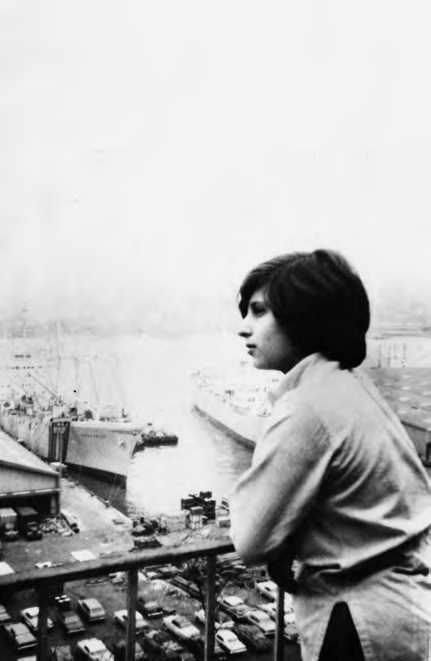
Vice President Lyndon Baines Johnson was quickly sworn in as the new president. As we watched Kennedy’s funeral, the most unforgettable image was of John-John saluting his father’s coffin, not yet grasping what it all meant. Jacqueline, her slight figure clad in black, a long veil covering her face, looked both dignified and grand. Beverly and I remained glued to the TV for three days, except for short visits to the kitchen. Dad paced the floor, sat down only to jump up again and pace some more.
Suddenly Beverly gasped and shouted, “Norman, come quickly. You’ve got to see this!”
Jack Ruby had just shot accused assassin Lee Harvey Oswald in front of scores of reporters and TV cameras. How could such a thing happen in the presence of the Secret Service, FBI agents, and police?
Dad said we would probably never know the truth about what really happened. He wanted to believe the FBI had a hand in that shooting, but later, in a letter to his friend Mickey Knox, he wrote: I suspect the real story is that two lonely guys, all by themselves, put more grit in the gears than anyone ever succeeded in doing before, and it’s just a mess, a dull and miserable mess.
In the same letter he adds that An American Dream, his most recent work, . . . of course falls by the side in all of this . . . With Kennedy alive it was a good book, but with him dead, it’s just a curiosity, and somehow irritating in tone. I don’t even mind the loss, in a funny way.
At this moment at least, Kennedy’s death and the end of all that his Presidency had meant to America, was much more important to my father than his own work. I think he mourned that loss off and on for the rest of his life.
Beverly got pregnant in the late spring of 1963, a few months after she moved into the apartment. This was to become the set script with my father and his wives, except for my mother and Adele. The rest usually gave birth to a baby sometime between the first and second year of the marriage. Age was an important factor, I’m sure. Both Jeanne and Beverly were in their thirties when they hooked up with Dad, so the idea of childbearing was probably already in the front row. Carol, who would be his fifth wife, was older. But she’d been Dad’s lover for several years, many of them while he was married to Beverly.
I suspect his being a confirmed alpha male made my father seem like a good choice for a woman ready to conceive a child. His fame was no doubt an added attraction. But Dad also had very specific ideas about birth control. He hated plastic, so diaphragms and condoms were out of the question. He thought birth control pills were bad for the soul. He firmly believed all souls wanted to be born and this, together with a good fuck, could make an exceptional baby. Or, as he tersely put it in his 1971 book, The Prisoner of Sex, “Good fucks make good babies.” Birth control only muddled the universe’s plan, as far as he was concerned.
When Beverly got pregnant, everyone was sure it would be a boy this time. Except for Dad, who said he was resigned to having another girl. But he was wrong. Michael Mailer was born on March 17, 1964, Norman’s first son after four daughters.
Michael was a cute baby with very blond hair and huge blue eyes that seemed to take up half his face. He also cried a lot. Beverly said he was very sensitive and that made him fussy. Today, I would probably say he might’ve been this cranky because Beverly was extremely anxious. Or, perhaps because he was a fussy baby, she then became overly anxious. Whichever was the case, life at home changed. The fun times dwindled into tense quiet ones; a “Shhh, the baby is sleeping and I’m exhausted” type of quiet. There were also frantic, busy moments getting things just so for Norman or the baby. That resulted in little time left over for stepdaughters. Fortunately for me, by then I was often out with friends, and could briefly escape the bad moods and pervasive tension.
Once he knew another baby was on the way, in the fall of 1963, Dad realized he needed more space for his growing family. The year before, he’d rented out the rest of the brownstone, and my bedroom on the third floor was now used as an office for his secretary. We now all lived together on the fourth floor.
To create a bit more room, he had a small bedroom built for me up on the roof, overlooking the harbor. Then, atop my bedroom another even smaller space was added, to serve as my father’s study. We called it The Crow’s Nest because it was perched on the highest part of the roof. Both additions were cozy, connected to the apartment by two small doors cut into the A frame. However, they had very little insulation, so in summer I baked and in winter I froze. Still, I cherished my little private room.
To get to the Crow’s Nest Dad had to walk across a plank situated thirty feet above the roof, with only three handrails to hold onto. He was afraid of heights, so every day he had to dare himself to cross that plank. He said this daily exercise mastered his anxiety and got him in a sharp mood before writing.
I wrote my first serious essay in ninth grade. Having recently discovered Franz Kafka’s The Metamorphosis and The Castle, I decided to do some research and wrote a fourteen-page essay. The title was “Franz Kafka’s Relationship to his Father.” The night I finished the paper I left it on the kitchen counter for my dad to read, and then in fear and trembling went up to my room.
Next morning a note on a separate piece of paper lay on top of the essay: “Congratulations Susie, I couldn’t have written a better essay myself! Hand it in and we’ll go through it later for style and grammar.”
I got a double grade on the essay from Eleanor, my English teacher: A+ for content and C- for grammar. After she returned it, Dad and I went through the paper sentence by sentence. He explained some of the mysteries of style and advised me to always read out loud whatever I wrote. He said sentences had a natural rhythm that I could only hear if I heard them spoken. There were certain words I should stay away from as much as possible, such as really, that, which, like, and very. He told me to be selective with adjectives, to vary long sentences with short ones, and to choose simple, strong words, not convoluted, pretentious ones.
Around this time my father was writing the monthly installments of An American Dream for Esquire. To get the work done he kept a strict daily routine. In the morning, he would get up, go down four flights of stairs to retrieve The New York Times, then climb back up. He’d sit at the kitchen counter and eat a whole grapefruit, leaving nothing but the bare rind. Then he’d have two scrambled eggs, two pieces of rye toast with butter, and black coffee. No one spoke to him during this time. We knew he was getting ready for a day of work and needed to collect his thoughts. He got in the mood by doing the New York Times crossword puzzle, or playing a hand of solitaire. If we had any questions they just had to wait until he came back down from his writing studio. Once in a while I would say, “Good morning, Daddy.” Usually he was too deep in thought, or in the fog of a hangover, to answer. If we did happen to ask something and he heard us, the usual reply was simply, “Not now, I’m thinking.”
Dad disliked talking on the phone. Anyone who wanted to get in touch with him had to go through his secretary. In the afternoons, after work, he’d spend more than an hour answering the day’s calls. But mornings were off limits for everyone. He was totally concentrated and oblivious to everything except his preparation for the day’s coming work.
In the living room of the apartment, a desk stood in front of the window that faced the East River and the skyline of Manhattan. He sometimes worked there in the afternoons, revising pages his secretary had typed. We could hear his pencil scratching the surface of the page, stopping once in a while to be replaced by a murmur. He read sentences aloud again and again until he found the right rhythm, the way the words sounded best together. Many times, he’d tap on the desk, rhythmically, slightly bowing, as if he were davening the way Orthodox Jews do while deep in prayer.
One afternoon, a couple of months after Michael was born, Dad told me he wanted me to do something important for him.
“Susie, I have a job for you. I invested in some stocks and I want you to help me follow the flow of the market. I don’t have time to spend looking at the Wall Street Journal, so how about if I teach you how to follow the stock market.” As usual, a statement, not a request.
He gave me a special notebook in which I was supposed to annotate the daily rises and falls of his assets. I got a quick lesson on graphs and how to draw the fluctuations each day—one graph line for each stock every week, his idea being that at a glance he could tell if his stocks were going up or down. All this, of course, saved him precious time, and was also supposed to give me an education in economics. It didn’t seem too complicated and the pay was great: ten dollars a week.
My father always insisted that any time one started a job, it must always be finished properly. But very soon I grew bored with drawing graphs and started skipping a day or two. I didn’t think this was much of a problem, but when Dad found out he was furious.
He sat me down in the living room and turned on The Mailer Stare. “Hey Susie, you haven’t been doing this job every day.”
I looked down, avoiding his stare. “Hmm, yeah, well, I had a lot of homework.”
“Look at me. Now, there’s something you have to get straight. When you start a job you finish it, and finish it well, or it won’t be worth the effort you’ve put into it. So, if you’re going to do what we agreed on, do it. Don’t piss around. Got it?”
“Yeah. Sorry. I didn’t think a day would make such a difference.”
“What do you mean, a day won’t make a difference? The whole idea here is for me not to have to worry about the market going down. If you miss a day, I might lose a lot of money. If it goes up and I don’t sell, I also lose money! You have an important job to do. If you don’t think you’re up to it, say so.”
I obediently replied, “Yes Dad, I get it. I’ll do it every day.” Even though what I really wanted to tell him was, “Get lost. I don’t want to do this anymore.”
That spring, my mother’s psychiatric residency came to an end. She was getting ready to leave Iowa and return to Mexico. On one of her visits to New York I made the mistake of telling her about my stock market discussion with Dad.
She was furious. “Norman’s insane to expect you to handle his stocks at the age of fourteen! How can he even think of giving you this kind of responsibility?”
It also gave her a good excuse to put her foot down and insist I go back with her to Mexico. But I didn’t want to leave, now that I’d found my place in New York. I was finally an insider, with friends. I had gotten excellent grades and been accepted as a staff member on the school newspaper. I didn’t want to go back and live in Mexico now.
But for Mom there simply was no discussion.
Dad wanted me to fight back. “If you want to stay in New York, stand up to your mother. Your mother is a bully and like most bullies, she will step down if you’re strong. I’m right behind you on this, but you have to decide first what you want to do.”
Yeah, right. My mother is a bully. So where does that leave you? I thought.
Around this time, I woke up very early one morning for an exam. I was walking across the ledge as I always did to get downstairs to the bathroom. Suddenly I fell, landing on the floor with a thud that woke up everyone in the apartment. I was unconscious for perhaps a minute. When I opened my eyes, I saw hovering over me the concerned faces of my father, Beverly, and Aunt Barbara, who had been staying in the apartment with us for a few months. I had no idea about what had happened. I had blacked out and now felt groggy and confused.
I lay quietly on the floor for a while. Finally, Beverly insisted Dad take me to the emergency room.
“Oh, I don’t think that’s necessary. Look at Susie, she’s fine. She’s a tough one, a little fall won’t break her.”
But Beverly and Aunt Barbara wouldn’t budge. They knew it had been a serious fall. After all, that ledge was about twenty feet above the floor.
Dad had no option left but to take me to the nearest hospital. We must have sat in the emergency room for more than two hours. My father kept asking the nurse at the admissions desk when the doctor would see us, only to be told there were many patients ahead of us, so we simply had to wait.
He looked at me and said, “You know something Sue, this could give me cancer. You’re fine. You don’t have a headache and you’re not acting dopey. So, let’s leave before we actually do get sick.” Patience had never been one of his virtues, and by then I was more than happy to leave that crowded emergency room.
Still, the unanswered question remained: Why had I fainted?
Everyone, including myself, was mystified that I’d suddenly taken a fall after crossing the same ledge hundreds of times. One moment I had been awake and walking on it as confidently as ever. The next I was on the floor, with no recollection of what had happened in between.
Perhaps the whole thing had been my way of saying, “I don’t want to make this decision. It’s too hard. Mom will hate me. Dad will be disappointed. I just want to disappear. I want to black out.”
I went to Mexico for the summer and tried to convince my mother to let me stay in New York, to no avail. Even though Dad kept insisting I should stand up to her, I wasn’t up for that battle. I was afraid to defy my mother, and certainly didn’t want my parents to get into another war. That was too scary to contemplate. So, a few weeks after I arrived in Mexico, I wrote to Dad, telling him I’d decided to stay there.
I claimed I was happy with my decision, and that wasn’t a total lie since life in Mexico was never bad. I still had my friends from junior high, and now the freedom to move around the city easily on my own. Also, I thought, I’ll be going off to college in three years, so if this will stop an open confrontation between my parents, I’m willing to wait and make the sacrifice.
It turned out to be only a temporary peace.