Michael Mailer has been involved in filmmaking for several decades and has produced more than twenty films. His recent work includes directing Blind, a film starring Alec Baldwin, Demi Moore, and Dylan McDermott. The following interview took place at the Sunscreen Film Festival in St. Petersburg, Florida on April 28, 2017.
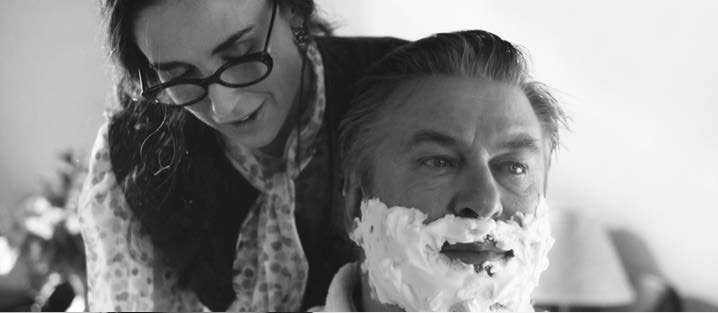
Phillip Sipiora: Michael, welcome to St. Pete. These are wonderful circumstances to reconnect with you. Seeing Blind, the 2017 Sunscreen Film Festival Florida Premier event last night was a real pleasure and we’ll get to that in a few minutes.
Michael Mailer: Sure. Thank you.
Sipiora: What I would like to do is begin with some general questions about your background, which individuals who read The Mailer Review know well, but others do not. So let me begin by asking you to discuss your roots in film. What were your earliest memories and awareness of your interest in cinema?
Mailer: Sure. As I talked about last night during the post-screening Q and A, I was first exposed to movie making on the set of Maidstone, which was a cinéma vérité film that Norman made back in the late 1960s. He did a series of three films with these very accomplished cameramen, Pennebaker and Leacock. They were largely improvised films, shot over a very compacted period of time. Maidstone was shot over a period of three or four days, if I recall correctly, on an island in Long Island, Gardener’s Island, mostly. There were some other locations.
In the film, at its conclusion, there was a scene where Rip Torn attempts to kill Norman with a hammer, literally hits him on the head with a hammer. I’m there witnessing it as a four-year-old boy and you can actually see me in the footage. It’s all on YouTube. It was a very traumatic experience for me, as it would be for any young child—any child, regardless of age, watching someone try to kill his father. My mother was there, and she was screaming. It was a very disturbing, upsetting environment and actually, to this day, I have trouble watching that film, because it just evokes all those memories.
In later years, when I told my dad that I wanted to go into film, we were discussing it and he said, “I think one of the reasons you’re interested in film is that you’re constantly trying to get to the heart of your first trauma, your sense of trauma from Maidstone.” And he was absolutely right. For years, when I was lucky enough to start producing, I always had this acute anxiety that would kick in the first day of shooting a film. I never quite understood it; it was above and beyond the normal jitters anyone has. It made me realize that—yes––I am constantly reliving these moments.
Sipiora: So there are things buried in your conscious and subconscious mind, and they’re still lurking, affecting your cinema.
Mailer: Yeah, absolutely. It speaks to a larger conversation on film and how the best movies bring out the subconscious meanings in life in the individuals watching the film. The great movies always have elements that are haunting about them.
Sipiora: As a film teacher I find that a fascinating topic. I constantly remind my students that when filmmakers talk about their films, when analysts talk about their films, and so on, no one can take into consideration the vast subconscious elements stored underneath accessible memories and experiences. Of course they’re there, and we like to speculate about them, but that’s terrain that’s really so difficult for us to access and analyze.
Your father directed four films that I know of. As you pointed out, he’s very interested in the cinéma vérité. Has his work in this tradition of vérité played a significant role in your growth and continuing evolution as a filmmaker? Do you see yourself as continuing in this tradition?
Mailer: On some level, yes. Certainly, as a producer, having worked with directors like Jim Toback, who is very well versed and skilled in vérité elements. A lot of his movies are improvised, or there’s always an element of improvisation. He brings out that element in acting and actors, where you really get amazing and spontaneous moments of emotion and interaction that you can only get from a vérité improvisational moment.
On the directing side of things, you have your script, and you have your plan. I always describe film as moving an army. Every day, you’re trying to claim x amount of real estate toward your goal of getting to the finish line. And you have this very set plan, but you get to set on a day of shooting and things tend to change. You have to be open to change. If you have good actors, and you have an environment that encourages an existential element to performance and scene as it naturally evolves, you can really get extraordinary stuff above and beyond what’s on the printed page.
Sipiora: Has one of your father’s films influenced you more than any other, beyond the traumatic experiences of Maidstone? Perhaps Tough Guys? Wild 90? Beyond the Law?
Mailer: I would say Maidstone, and not only just from a personal standpoint. I was watching a retrospective on his movies at BAM. I went to a screening of Maidstone, and it just dawned on me. The movie is incredibly flawed in so many ways, and it really could have withstood another couple of months of editing. It’s one of the most effective films I’ve come across in terms of evoking a mood. You really get an anticipation, a premonition, of all the ideals of the sixties imploding into this mass of excess of decadence and violence. You feel immediately melancholic and depressed as you’re watching the film. It creates this almost palpable miasma that you just can’t shake after you see the film. It lives with you for a while. It’s very hard to pull it off in any movie, but he was a great creator of mood in his film works.
The other two, Beyond the Law and Wild 90, are less interesting to me. You do get a sense of mood and this kind of crazy, existential life of these characters, and you just don’t have any idea where it’s going to go from point A to point B, or where the hell the dynamic of the story is heading. Tough Guys was a more traditional film, but you do get a great sense of this town [Provincetown], this environment, and the people living in the environment. It’s mood inducing.
Sipiora: Tough Guys has qualities that I appreciate as relating to the neo-noir tradition. It’s clearly an edgy film and my students have responded quite enthusiastically to it. Its nuances, subtle and not so subtle, are ripe for interpretive speculation. And there are elements of fantasy, of fabulation, that enrich the story, at least for me.
Mailer: Oh yeah.
Sipiora: One thing that I’ve always admired about your Dad and his work in film is that he was not afraid to take risks. He never seemed, at least to me, to be motivated to simply generate a “well-made film.” That formula just wasn’t in his playbook, from my perspective. I really admire that. Norman Mailer, in my view, was full-throttle in everything he attempted. He held nothing back.
Mailer: Yes, it wasn’t his forte. Obviously, writing was his forte. But I admired his drive to experiment in other arenas, film being one of them. I think that, if you’re going to experiment, you should take chances and take risks, and really try to figure out if you have a voice or not in that medium. I think, had he become a traditional filmmaker, it probably would have destroyed his writing.
Sipiora: That’s a very interesting speculation. Did your mother, Beverly Bentley, have much influence on you, specifically in terms of film? I know that she was active in Maidstone. I’m guessing that you’ve been asked this before, about the influences from both your parents.
Mailer: My mother was a well-known actress, very talented. I don’t think that she ever quite achieved her apotheosis, at least as she thought fitting. She was very gifted and lived her life in a very theatrical manner. She was very unpredictable. I sort of feel like I can deal with difficult actors, because I had a difficult mother!
Sipiora: As I recall, she was from Tampa? Or she lived here for a while?
Mailer: She lived in Sarasota for a period of time. I’m not sure about Tampa, but she definitely lived in Sarasota as a child. She was originally from Georgia, but they moved to Florida. They bounced around a bit, so it’s possible that she was in Tampa.
Sipiora: Your father has written quite a bit about film theory. The Mailer Review devoted an issue to film in 2009, which includes Norman’s theoretical and practical insights on filmmaking. I’m wondering if there are specific dimensions of his theoretical interests or insights that he may or may not have implemented into his film work. Have those influenced you in ways that you know?
Mailer: Yes, he wrote very eloquently about movies existing in the state between memory and dream. I think the most evocative films are the ones where you are existing in this plane of the subconscious. You’re not even necessarily aware of how it’s communicating with you until many days later. To me, the mark of a great film is that you think about it, absorb it, and discover it hours, days, and weeks after you’ve seen it. It’s not always in the viewing that the full impact of it sinks in.
Sipiora: That’s a keen point. I would guess that is true of all art, whether visual arts, poetry, or whatever the case may be.
Mailer: That’s very true, yeah.
Sipiora: As I drove over today, I was recalling your history as a Golden Gloves boxer. I was wondering, does Michael Mailer make connections between his boxing experience and filmmaking? They both would seem to present long term and exigent challenges, both involve facing off with opponents, and both involve tension and stress. And they clearly share numerous “mind” issues.
Mailer: I think that there are parallels and I think that you’ve laid some of them out. I was never at a level where I had an opportunity to study my boxing opponents and think of a game plan. You had your technique and your discipline, and you look to execute it, much the way you look to execute a film, based on your preparations for it. But, of course, you get in the ring, and things change. The opponent doesn’t have the weakness you thought he did: he’s got strengths in that area and weaknesses in other. You look to move and capitalize on the dynamics of the situation. A movie set is a very move-able, variable, liquid situation where you have to be on your toes, you have to think quickly, you have to achieve your goals of getting the day done. . . .
Sipiora: Like a boxer.
Mailer: Yes, like a boxer.
Sipiora: I met José Torres (world light heavyweight champion) in 2003 when your father hosted a small party at his home in Columbia Heights and I had a wonderful conversation with José. He told me that he had had several championship fights, and he spoke specifically about three of them, two of which he had won. He said that in two of the three bouts, he had the wrong game plan, which he had only realized once the battle was underway. In one case, he was able to adapt and adjust. In another case, he wasn’t able to make the necessary adjustments. He didn’t elaborate, but I’m just guessing it had to do with a strategy for being either more or less aggressive. What you’re saying rekindles my conversation with Jose and reminds me of the spontaneity and immediacy of that special moment in any art, but especially film making, where things happen at a frenzied pace, much like boxing and strategic decisions are made in the flashing of an eye. How do you see moments of tension and opposition in filmmaking?
Mailer: I don’t want to lay out the dynamic of director and actor, but you definitely have moments of opposition. Typically, the actors are very good and experienced, and they have a certain interpretation of the character that may not agree with your own. You hopefully find a rhythm and balance between those two competing interpretations. If you do it directly, as opposed to from oblique angles, you can make matters much worse, so it is stylized like a prize fight—an act of communication. Fighting is very much an act of communication, like film. You look to find a certain rhythm to the fluidity of the match.
Sipiora: Relating rhythm to fluidity to special moments in time—what an intriguing connection. Going to what you said about being on a film set, interacting with actors, the cinematographer, etc., is it fair to say that there’s a productive tension that grows out of this?
Mailer: Yes, and you step onto your set with a game plan, a strategy, an interpretation, a vision that you look to execute. And it doesn’t always go according to plan, so you have to be adept at changing that vision. If you have good actors, good people working with you, a good director of photography and what not, that collaboration can be very effective and make for a better film down the road.
Sipiora: You’ve obviously had a long and very successful career as a producer and have recently turned to directing. Was there a specific turning point that explains the transition? Did something happen where you abruptly made that move, or had you thought about it for a long time?
Mailer: I had gotten to a point on a particular movie where I developed an allergy to my set. I was a guy who always spent his days on the set. I was an active producer, there for the duration of a shoot day. All of a sudden, I just couldn’t do it. I couldn’t bring myself to have the same conversations, the same issues, the same problems with actors. I said, what’s the matter with me? The more I thought about it, the more I realized that I had to up my participation in this medium creatively. Naturally, the move was to step into directing.
Sipiora: So it was a natural evolution.
Mailer: Yeah, I had thought years ago about making the transition, but I wasn’t quite ready to do that. Not to get overly psychoanalytical: my father was such a force creatively that I was a little intimidated about doing things that, on a creative level, emulate a writer, as in his case, or a painter. I didn’t feel like I could give myself permission to move into that purely creative space, until I did. Well, I won’t quit my day job of producing, but my passion is directing. I hope to do a few more movies before I’m done.
Sipiora: Do you think your many years as a producer has significantly affected your directing in specific ways? Things that shaped you as a producer?
Mailer: Yes, definitely.
Sipiora: It seems to me that most directors have not been producers.
Mailer: Most have not. They start out as directors, or they come in from acting, in many cases. It is usually a creative transition, not so much a creative business transition into pure creative. But yes, from a practical standpoint, having been on so many sets and worked with many first-time directors and a lot of directors who were very collaborative, I always felt involved on some level creatively—from developing material to actually making the film. When you’re producing, you’re dealing with not just the creative, but also the business aspects and the physical, logistical restrictions of making a film. You learn how to make the most out of your day. You have to. If you don’t shoot your day as planned, in terms of your page count, and you start falling behind, it can be a very debilitating phenomenon. It’s a horrible feeling to deal with, because then you’re cutting scenes and rearranging schedules, and it just adds to the stress factor.
Sipiora: I’m guessing that all directors have antidotes ready when those situations come up. Writers often experience a block at one time or another. Professional writers know what to do to move beyond procrastination. Is it a similar situation in directing?
Mailer: There’s a tendency in directing, particularly if you’re not experienced, to spend too much time on one thing and not enough time on another. For instance, when you look at your day of shooting, you can get bogged down in a scene that’s not as significant as another scene, emotionally and visually, in the course of that day. What happens is that you spend too much time on the less significant scene and not enough time on the more significant part of your shoot day. That’s something you learn from producing: put your energy, focus, and money where it counts, because you don’t have a lot of it to spare. It’s not an endless, limitless source, so allocating your time and your emphasis is crucial in making a good independent film.
Sipiora: Do you see yourself as part of the earlier auteur context in which directors were perhaps the primary focus in film making, as opposed an earlier era—the twenties, the thirties, and forties—where the actors tended to overshadow directors? Everyone knew the actors, yet not so much the directors. Do you see yourself as part of that tradition?
Mailer: I would like to. I think the best independent movies were made in the seventies, the early Scorsese or Coppola films. Independent cinema hit its zenith back in the seventies, movies like Taxi Driver and Mean Streets. The directors became equally as important, in terms of the star of the film, as the actors themselves. I would like to think that my oeuvre—I’m just starting from scratch on a certain level—will amount to something that people will say, “It’s a Michael Mailer film. He’s an interesting filmmaker. Let’s watch it for that reason,” not because an Alec Baldwin or a Robert DeNiro is in it.
Sipiora: I always encourage my film students to find directors that they admire and watch everything that they have done. I suggest that they not simplistically view as much cinema as they can, but be selective in their choices. Sometimes my students get hooked on filmmakers like Darren Aronofsky, Sophia Coppola, Christopher Nolan, Lars Von Trier, Gaspar Noé, Martin Scorsese, and so forth. My students are often inspired to appreciate the work of these artists, and I think that fits in with what you’re suggesting emphasizing the importance of the auteur, the notion that there is a powerful connecting link between viewer and director.
Mailer: Yes, the great filmmakers clearly have a certain style and approach to filmmaking. You can see that throughout the body of their work. To draw a parallel to my dad, what made him so unusual as a writer is that he would shift styles, genre, and voice in whatever book he was writing, which is unusual for most writers. I’d rather make a very good film than necessarily have a predetermined stamp of style that goes on it. Every movie should find its own rhythm and its own visual poetry and not be force-fit into a certain aesthetic that you’re good at. Having said that, I do feel that having a point of view and a vision is extremely important, and there’s no reason why there can’t be elements of that vision and style in anyone’s body of work. I would be hesitant to say that I’m the guy who’s going to have a very distinctive, unique style in every movie he does that says, “Oh, that’s a Mailer film” as opposed to “Oh, that’s an interesting movie that Mailer did. I see the elements from other movies, but it stands on its own merits. It’s not a reproduction of the stuff he’s done in the past.”
Sipiora: I’m hearing you emphasize flexibility, the ability to respond to exigent circumstances and make whatever moves are necessary, rather than following a predetermined formula.
Mailer: Absolutely. Again, I’d say my dad was a virtuoso in changing styles, depending on the nature of the material he was writing and exploring, and the characters. Yes, I think every movie should have its own internal aesthetic, its own voice.
Sipiora: Who are the two or three directors whom you most admire? Those filmmakers that you consider seminal to cinema over the past last thirty years or so.
Mailer: The greats are Scorsese, Coppola, Oliver Stone. Oliver is a brilliant director, but he also has a very distinctive style. You certainly know when you’re watching an Oliver Stone movie. His approach would be somewhat different from my own. In terms of contemporary film makers who are my age or a little bit older, the director I like watching the most is David O. Russell, because his work is so eclectic and unusual from film to film. He loves exploring the quirks of character, and to me that’s very compelling in watching a movie.
Sipiora: He reminds me of the Coen brothers, capitalizing on “freaky,” hyperbolic characters.
Mailer: Yeah, but he’s not as extreme, in my opinion, as the Coen brothers, who are brilliant film makers, but are very stylistic—they are almost on the verge of exaggeration to the point of taking you out of it. David flirts on that edge, but you’re always in the movie. They are always real characters. They are not augmented characters.
Sipiora: So audiences can relate to them, rather than watch a spectacle.
Mailer: Exactly.
Sipiora: That’s one of the things that I took away from Blind. The characters are so accessible. There isn’t a wall or artificial distance between viewer and performance. We’re not watching spectacle. We’re interacting. These dynamics would seem to be basic human conditions, fundamental emotions, challenges, interfacing with the dark side of life. Who doesn’t go through life situations in some way related to these narratives?
Mailer: Right. In telling a love story, I wanted to avoid the trap of sentimentality. It’s so easy to drift into this morass of sentimentality, and I find it so offensive in any film. Ultimately, it takes away from the truth of it. I assiduously avoided dwelling in those moments, because the story could have lent itself to that direction. I think it would have made it a less good movie. Keeping it real, finding the truth, is always the mantra any filmmaker wants to abide by, if he or she can.
Sipiora: I think that Blind definitely has quality. It’s really accessible, at least to me.
Mailer: Thank you.
Sipiora: Some of my students are interested in the philosophy or the sensibility of directors. In my “Rogue Filmmakers” course, we study “edgy” directors: Darren Aronofsky, the Coen brothers, Lars Von Trier, Christopher Nolan, Agnieszka Holland, Gaspar Noé, Rémy Balveux, Stanley Kubrick, Pier Paolo Pasolini, and others from an earlier time. As students explore the apparent philosophical underpinnings in these films, they find that these directors have changed the direction of cinema away from stability and certainty in character, plot, ethical positioning, and adjudication or closure at the end. I’m very interested in your perspective on that. Do you feel you have an underlying experiential sensibility—a sort of metaphysics of filmmaking? As you said, when you see a Coen Brothers film, you can anticipate some of the directions that are going to come.
Mailer: I think that it’s very easy to go to a typical Hollywood movie and in the first ten minutes plot out what’s going to happen. It still may be rewarding, but you know exactly the direction it’s going. To me, that’s less interesting. I’d rather make a movie that has certain surprises that are true to life. You want to walk the line of truth, but make it a little more heightened, to the extent that you offer possibilities that may not necessarily present themselves in real life. At least have an anchor in that continuum of reality, so you’re not spinning into fantasy land. But at the same time, you can offer possibilities of human change and interaction. It’s a fine line. There are movies that are just depressingly real and still very profound, like Manchester by the Sea and, to some extent, Moonlight, although Moonlight had a weirdly more hopeful end to it. I love those movies. The film I’m planning to do next is more of that type, and certainly of Blind. But for me, because we are looking at a concentrated mélange of humanity, you want to get something out of it that is real, but yet at an imagined level of reality.
Sipiora: Is it fair to say that your sensibility instinctively responds to situations requiring change?
Mailer: What interests me in film and in life is that all of us have possibilities to change, to become something different from what we are, to achieve something that we haven’t achieved. Most of us never quite get there, but we all believe that there’s an element of that within us. People love movies that awaken that possibility, inspire that imagination where you can, at least in the course of the two hours watching the film, see yourself having that second chance—that second act, so to speak—taking a step in a direction that may fundamentally alter your life, altogether.
Sipiora: So the viewer cannot help but become intimately engrossed and part of that experience.
Mailer: Absolutely. You want to empathize with your audience. You can smack them in the head with the dreariness of life effectively, but I’d rather leave them with something that offers the possibility of change.
Sipiora: Some directors are known as being hands-on, managing everything, including and especially acting. How do you see your managerial style?
Mailer: Here’s one definition for that: It largely depends on the actors you’re working with. To me, a great actor will bring something to the role that you’re not necessarily anticipating, and often it can be really genius stuff. You want to encourage that to happen. I think that when you get into trouble is when you have actors that are not as talented as other actors, even in the same movie. They’re not offering you something that’s different or what you expect. Then you have to rely on your ability to draw out a performance, to break through whatever wall, in addition, or any talent limitations that you’re dealing with. That’s great directing, when you can bring out of someone something that wasn’t there to begin with. A lot of directors have different styles of interaction. Some are very much bullies and are very tough. I don’t think that’s the right approach, frankly. I don’t think that you intimidate your actors with direction. You romance it out of them, on some level.
Sipiora: The managerial component of directing depends significantly on the actors? Their talent, training, and temperament?
Mailer: Yes, absolutely. Some actors can be very difficult. They don’t want to take any direction. Others are so needy of direction that you find that, no matter what you say, you’re just not going to get where you want to be with the evolution of that character or the performance that’s coming out. I’m more in the camp of collaborating with my talent. When you’re dealing with the Alec Baldwins, the Demi Moores, or the Dylan McDermotts of the world, it’s almost like being in a literature class, where you’re interpreting the work. You really talk about the character, the nuances, the subconscious, and the motivations. You explore it together, and then you often get something’s that really terrific. At that point, it’s just a question of fine tuning. The music is beautiful, just change a note here.
Sipiora: Tweak a little, mid-course?
Mailer: It’s finesse direction, as opposed to, “This is how I want you to say it. I’m going to read the line for you. Do it the way I say.” That, to me, is an abomination.
Sipiora: Antonioni did that, as I recall. He was well known for micromanagement, which drove some actors crazy. I’m assuming that you discuss roles in detail, certainly with the major actors. Do you give them your sense of what a character is like and should be doing? Do you solicit their sense of the character? Is it a careful negotiation?
Mailer: That’s a very good question. Ideally, you want the actor to find his or her level of truth in the character. It’s much easier for them to arrive at it, rather than to impose it upon them. You may have the answer in your head, or know what you want, but it’s much more effective to get them to think of it themselves, as opposed to saying, “This is the motivation that the character is dealing with,” imposing it from outside. Under the pressures of time, when you’re dealing with talent that’s not so great, often you have no choice but to say, “Look, this is the motivation. This is how I interpret this character. Find that state of mind and heart, and deliver.”
When you’re dealing with great actors, the joy is not only helping them discover the essence of the character, but also, as a director, finding the elements of that character that you didn’t see before. They are bringing something that lets you say, “Wow, that’s interesting. I didn’t quite arrive at that myself. You’ve allowed me to get there.”
Sipiora: You’re learning from the actors.
Mailer: I’m learning from them, and they are hopefully learning from me. That, to me, is the beauty of the collaboration.
Sipiora: Do you find that actors sometimes grow in roles? Let’s say you’re shooting for a month and, in the second week, you see a remarkable difference.
Mailer: Yeah, absolutely. I’ve had limited acting work on films. I remember once I was doing a James Toback movie, When Will I Be Loved. I couldn’t produce it at the time, and he said, “Why don’t you act in it? There’s like three or four days of a role that you’d be good in.” I said, “Well, I’m not really an actor, James.” He said, “That’s alright. We’ll discover it together.” And by the third or fourth day, I was really starting to embody this character. Then, all of a sudden, unfortunately for me, it was over. It’s like a bottle of wine—the more it breathes, the better it tastes.
Sipiora: That’s a great anecdote—and metaphor! Do you ever find that you have to put your foot down sometimes? That you see something you’re uncomfortable with, and you say, “That’s it!”?
Mailer: Of course. Often, no matter how talented the actor might be, not every choice they make is the right choice. You have to know, ultimately, what you want. If some established actor is doing something that I don’t think is quite right—it’s not surprising me creatively or imaginatively—I’ll say, “OK, we did it your way. Now let’s do it mine.” That’s kind of a standard approach to direction. By the way, in the edit room, you always want as many choices as can have. What makes sense to you on the day of shooting may not work creatively for the overall editorial of the film. It may be that you do to a take that you thought was no good, but in fact is much better than it seemed at the time, in terms of the continuity of the film.
Sipiora: Martin Scorsese is known for shooting tremendous amounts of footage and most directors don’t seem to shoot so much as he. How do you feel about that? You said that you like to have lots of choices. How far would you extend that? You’ve got a two-hour movie—how much time are you comfortable, usually, in shooting?
Mailer: Kubrick is also famous, even more so than Scorsese, for spending an entire day on a sentence or one line of dialogue. From a practical standpoint, I never have that luxury. But when you’re managing your day, you want to save the most amount of time for the most important scenes. You may shoot ten or fifteen takes. If I had my druthers, I would shoot more, if I felt it wasn’t quite there. Sometimes the ennui of doing it over and over again produced something unusual. I think that was the technique that Kubrick relied on. I think he’d get his actors so . . . almost frustrated that they were doing it over and over again. Then that frustration would manifest itself in a given take, and it would be what he was looking for to begin with.
Sipiora: So, Kubrick would wring it out of them, using subtle ways?
Mailer: Yeah, tricks. First, I don’t have that luxury, ever, or I haven’t so far. Secondly, at a certain point—unless you’re Kubrick, which I’m clearly not—some actors will say, “Michael, I think we’ve got it. Let’s move on.” That’s not often the case, because most actors would love the opportunity to do it over and over again. Occasionally, though, they will say to you, “I think I’ve given this every angle that I can. I’m not sure that there’s anything more in me.” At that point, if you respect them, you say, “OK, we can move on.”
Sipiora: Let’s turn to Blind. One of the things that struck me was how tightly edited the film is. I didn’t see any superfluous footage in there, and I look for these things.
Mailer: I see lots of superfluous footage in there!
Sipiora: But it’s your baby.
Mailer: But thank you for saying that. You can spend years editing a movie. There are things that I saw last night that are like, “God, I wish I’d cut that scene out, trimmed that scene here, put that other scene back.”
Sipiora: When I give a lecture, right afterwards there are twenty things I wish that I would have said differently. Isn’t that part of being human?
Mailer: Well, of course. One of the pleasures of growing up with Norman Mailer as your father is that I had the chance to work with him creatively on scripts that I was writing when I was starting out. Then he’d bring out the red pen and, boy, would he slash and burn. They were really invaluable lessons. You got an instant course on how to edit your material. You had to prune out stuff that you thought, “That’s so good.” But ultimately, he was right—it had no place in the script or the scene. You’re giving up your little garland.
But when I’m in the edit room or looking at a script, I kind of revisualize those creative sessions I had with my dad. In the edit room, I hear his voice all the time. It’s very hard to let go of material that you’re very fond of and you remember how long it took you to get that one scene. Now I have to cut it out? It’s like losing a limb. But at the end of the day, it doesn’t serve the economy of the picture.
There are always exceptions to that rule. One of the things about Moonlight which I really admired—something I couldn’t bring myself to do, because it’s so ingrained in me not to do—was its ability of the film to dwell in its silences and pauses. It’s almost lyrical and poetic. It is quite beautiful. You obviously need a captive audience. It’s not a movie for the wide denomination of audiences. But if you’re in that right frame of mind, you really got something extraordinary, which I think Jenkins captured nicely.
Sipiora: Can you tell me how Blind came about, the genesis of it? I know that your brother, John, wrote the screenplay. I recall that you had the idea first, and then John wrote the screenplay.
Mailer: One of my producers, Diane Fisher, originally had an inspiration, not an idea, for a film. She was working at the Lighthouse [now the Lighthouse Guild], which is the premier center for the blind. She would volunteer to read to a blind man, who over time fell in love with her. He couldn’t see her, but he could sense her and smell her. She said, “There’s an idea here.” She was right—she talked about it with John and me, and we thought, let’s develop this into a film. Cut to many, many years later and we got it into proper script form.
Sipiora: So, it was a long time in gestation.
Mailer: Very long time.
Sipiora: What was your budget and shooting time?
Mailer: My budget was under three million. I had twenty-one days in New York and a day and a half in France. It was basically four weeks, which is a very tight schedule. I really could have used a few more days, but I just didn’t have the money.
Sipiora: Was Alec Baldwin there for most of those four weeks, because he’s in so many scenes?
Mailer: He didn’t shoot every day, but he was there for the bulk of it, absolutely.
Sipiora: How about Dylan McDermott?
Mailer: Dylan was there for slightly less than Alec and Demi, but he worked at least half of the schedule, maybe a little bit more.
Sipiora: Can you tell me how you connected with the three main actors? I recall that you knew them from their earlier work.
Mailer: I knew Alec because I had done a movie with him called Seduced and Abandoned, which is a quasi-documentary that James Toback directed about the Cannes Film Festival. Alec was very prominent in that film—he was basically our Virgil, taking us on a tour of Cannes. So I had a relationship with him, and I always thought that he’d be terrific in the part of a blinded writer. It was kind of molded to his character in many ways. I gave him the script, and I was lucky enough for him to read it and say yes. That was the initial, foundational piece of the casting.
Then Demi came on board. In the script, it’s written that she’s much younger than the Bill Oakland character, the writer. When we thought about Demi, we thought, this is interesting. It’s not only a love story about people over the age of fifty, which you rarely see in Hollywood, but we’re making them co-equal in age. That also cuts against the grain of most Hollywood movies, where the guy is usually much older than the woman. I just thought it was fortuitous that it worked out that way.
Sipiora: Well, I think that it works really well. Their chemistry is undeniable.
Mailer: Yeah. Thank you!
Sipiora: Did you modify the script significantly or only in minor ways, once John had written it? Was it a situation where, on a daily basis, you might go in and tinker with lines?
Mailer: We did a fair amount of rewriting once we cast. Demi had some very interesting ideas, in terms of making her character stronger and a bit more of a force in the piece. She was initially more meekly written. Most of the rewrites had to do with evolving and adjusting her character—making her a stronger character, more relevant to the storytelling. The movie, in a way, is certainly as much about her as about him. You could argue that she’s the one who really makes the tough choice at the end. There’s a very strong element of female empowerment dynamic going on in the story.
Sipiora: So Demi wanted to strengthen her character. Was it something you talked about and negotiated?
Mailer: A lot of those ideas came from her. Initially, I was not open to them. We had our battles. But at the end of the day, she was right. At some point, I realized what she was trying to do, to make her character more relevant in the telling of the story. I agreed with, say, seventy percent of her suggestions. Poor John, my brother, was like a field hand working the farm. He did his share of labor on the script.
Sipiora: Well, you’ve made quite a love story. I’m interested in what attracted you to the love story genre.
Mailer: To me, what makes this movie work is the idea that we’re dealing with the notion of blindness, the inability to see. It’s not just on a literal level, but also on a metaphorical level. The idea that all these characters are blind in some form or another, and regain sight or are able to see for the first time in their lives, was a very powerful metaphor to me. To put that into the context of a love story just made sense. Love is universal—the idea that you can have “second acts.” Another thing that appealed to me was that it’s a story about an older couple having a second act. That’s not often the case. You go from a reality that’s heightened by this possibility that can happen, but often doesn’t.
Sipiora: Motifs of blindness and insight would seem to be integral to life. In this case, we have literal blindness and figurative blindness, with accompanying insight, which I found very compelling from scene to scene.
Mailer: You look for larger themes in the work you do, and that was a theme that I felt compelling to tell or explore. Another thing about the film that I thought of while making it, and thereafter, was a parallel to my dad’s writing. He was very much obsessed with smell. This movie really touches on the sense of smell in so many ways throughout the piece.
Sipiora: Chanel No. 5.
Mailer: Yes, the green candle. The stench of the room. The ability to see life through smell. You can smell the rose when he puts the flower into the vase. If Smell-O-Vision were back in force, this movie would certainly lend itself to that.
Sipiora: What are some particular challenges in making a love story? It seems to me that there’s much risk in making a love story. If you go too far in terms of sentimentality, it doesn’t work. If you go too far in the other direction and seek a hard edge, it often doesn’t work either. I would guess that a director is always looking for that strategic point—not a midpoint but the right point between insufficiency and excess—in the spectrum of opportunities. I’m wondering if dealing with love, relationships, and/or sex presents a director with special challenges and obstacles that may not come about in the other films that you’ve worked with.
Mailer: Yeah, I wanted to tell the story in a way that was real without getting into overly sentimental moments and moods. At the same time, I wanted to present it in a way that it’s heightened enough that people will see it as a film about possibilities—the possibility of falling in love over the age of fifty. To some extent, it’s a bit of a different spin on your average love story. Most of them are about young, beautiful people. In the script, there is a love scene that takes place, where they are making love in bed.
Sipiora: Was that scene trimmed down?
Mailer: No, we ended up not shooting it, and I’ll tell you why. When we shot the kissing scene, it was so tender, beautiful, and romantic, that I found—as did Alec and Demi—that to go from there to them in bed having sex was almost redundant. At the time, I thought, how brilliant this would be: I will be the first director to do a love scene about Braille . . . in bed.
Sipiora: The ultimate Braille.
Mailer: Yes, the ultimate Braille. But the tender moment of the kiss is such a powerful moment . . . to go from there to the bedroom with them actually having sex would have been almost counterproductive and counterintuitive to the moment we captured prior.
Sipiora: Blind is a relatively “clean” film in terms of contemporary cinema. I’m wondering if at one time you had thought about including more nudity, more sexuality—not that one scene specifically, but perhaps in other scenes. Was that ever an issue, or did you stay on course with what you wanted?
Mailer: There was a sex scene between Dylan McDermott’s character and Deanna, Demi’s girlfriend’s character. It wasn’t raunchy, by any means, but it was definitely a full-throttle love scene.
Sipiora: R-rated?
Mailer: Yes. We ended up cutting it out. The scene unto itself was a great scene. The actress who plays Deanna was very good in it and isn’t speaking to me to this day because I cut that scene out. She’s so upset. It just didn’t serve the movie, ultimately. My fear was that I was going to make Dylan’s character so unlikeable to the audience that when Demi’s character stays with her husband, it would seem like such a bad decision, that the audience would be cut off from empathy thereafter. I wanted to suggest he was having an affair; I didn’t want to see it. It would have diminished the power of the film.
Sipiora: Perhaps too much stagger or disillusion?
Mailer: There would have been no anticipation for discovering the infidelity in a way that registers with the audience. The audience would have been one step ahead of her in that discovery. I wanted her and the audience to discover it at the same time. At that point, you’re so much in her world that it’s shocking and realistic that she would leave him.
Sipiora: I felt that we become part of her world. And she’s part of our world.
Mailer: Yes. There’s that interconnectivity that works so beautifully in film.
Sipiora: After watching Blind, I was thinking about the relationship between sexuality and sensuality. It seems to me that Blind strikes, not a balance, but a nuanced relationship between the two. As a lover of film, I think that sensuality is critically important. We get sexuality in so many films, but without sensuality. It’s often just not as effective, at least to me. How do you feel?
Mailer: Honestly, the best sex scenes are the ones that suggest sex. You don’t actually see its nakedness. In that film with Dennis Quaid and . . . I’m blanking on her name . . . the sex scene went up to the point just before she removes her underwear. It’s so unbelievably sexy that you don’t actually see them having intercourse, but it’s suggested. It works beautifully in terms of just conveying heightened arousal. I think less is best in so many forms of film, whether it’s horror, sexuality. The exception in that case is action.
Sipiora: Perhaps anticipation, rather than reality itself, when our minds can dig creatively into it?
Mailer: Nothing’s more effective than one’s imagination, as opposed to spelling it out for everyone.
Sipiora: How important is romantic chemistry between the characters? In a love film, I imagine that if it isn’t there, it must be hard for the actors to sell it.
Mailer: Well, good actors act, and you can disguise up to a certain point. I do think that, if there’s no chemistry there, it will translate in subtle ways in the film. Even though Demi’s character is not into him at all, Demi was so much in character that it intimidated Alec the human, not Alec the actor playing the role. Here was this woman, not really interested in him physically. He’s so used to women fawning over him. I think he felt slightly intimidated by her. I think that she’s so clever in that she, in her own way, was keeping the character alive off set as much as on set. It worked. When she starts to flower for him, he’s so grateful that it really comes across on screen.
Sipiora: Demi nailed her role.
Mailer: Yeah, she’s such a good actor. She’s been on ice for so long, that I’m hoping people see this film. The two of them are extraordinary, but Alec is constantly working. She has been much more quiet, in terms of her career recently. I think people will be happily surprised to see her in this part.
Sipiora: I was quite impressed by her range.
Mailer: She’s extraordinary.
Sipiora: Truly stunning. Can we turn a little bit to the future of film? As related to you, but speculative, in terms of cinematic developments in general. There has been so much technological evolution in filmmaking. The majority of directors now use digital cameras, but there are some stalwarts who refuse to use them—Christopher Nolan, for example, will not shoot with a digital camera. I’m wondering about your thinking of digital vs. 35mm.
Mailer: Christopher Nolan is as near genius as they come these days. He has the luxury to pursue things on an aesthetic level that your typical indie director just doesn’t have. He can shoot on 35mm. I started out on 35 when I was producing my early movies. Then once digital became effective as a medium, we switched over, because it was so much cheaper. One moment, I fantasized about shooting Blind on 35mm, but I just couldn’t afford to do it. I think that video can flatten out certain things. Digital has gotten so good that it’s less of the case now, but it can create this very subtle veneer that works against the magic and the glow that you get from film.
The thing I’m more concerned about, frankly, is that your new TV set has such a hard, video quality to it that, no matter how good the film looks or how good you shoot it, it ends up looking like a bad daytime soap opera. That, to me, is far more distressing and problematic for the future of film than whether you shoot on 35 or digital.
Sipiora: Which camera did you use as your basic camera in Blind?
Mailer: We used the Alexa.
Sipiora: That’s a pretty popular camera.
Mailer: Well, it’s funny, we shot it in 2K, which two years ago was the cutting edge. 4K? People were just starting to talk about it. Now, everything is shot in 4K. Shooting in 2K would be considered a heresy. It’s funny how it’s quickly changing. I’m actually terrified about where technology is going to take us in every aspect of our lives, but also in film. They already have the ability to digitally recreate characters from old films—Humphrey Bogart movies to whatever. They have the technology to make people look young, to make people look old, and to actually take people who are dead and reanimate them. It’s going to be the end of existential filmmaking as we know it.
Sipiora: What’s real?
Mailer: Yeah. I was reading an article the other day about this. You think creativity will be the last bastion against technology, but I’m not so sure. They’re now talking that AI systems will be able to recreate these characters, living or dead, where you won’t need a director or a writer anymore. You can actually produce a script and performances through algorithms, where the whole thing is being done by a machine.
Sipiora: Maybe casting robots?
Mailer: I hope it’s not present in my lifetime, but I do think it will be present in my son’s lifetime. I’d hate to see that happen.
Sipiora: Here’s an issue that intrigues me: the whole business of capture and storage. Films that were made in the late 1800s and early twentieth century can still be viewed. We put them on a projector and they work. But some videos made in the seventies cannot be run anymore—we simply don’t have the machinery. It seems to me that the answer isn’t that “everything is digitized now.” I believe it may be more complicated than that. I’m wondering how we will deal with capture and storage twenty years from now. Do you have any thoughts on that?
Mailer: I haven’t thought about it in that sense. Does the digital image degrade? I don’t know. I’m less concerned about that than the idea of art being created by robots and artificial intelligences. That, to me, is a far scarier concept than whether digitization survives as a long-term medium. I don’t think it’s going to go anywhere. The idea that we may see our entertainment through machines is terrifying to me.
Sipiora: I worry that these changes will extend through the arts. Music has long been generated by computers. Professors may become extinct . . .
Mailer: Yeah. Robots can become Picasso. It’s a scary world that we’re entering, not just in terms of creative expression, but labor. Everyone’s going to be out of a job.
Sipiora: Who’s going to buy things?
Mailer: Once you have pilotless vehicles and cars . . .
Sipiora: And aircraft . . .
Mailer: Something like 25% of the economy is connected to the industry surrounding transportation in one realm or another. Imagine all of that being automated. We’re talking about millions of jobs. What happens to these people? Where do they go?
Sipiora: All of these issues impact cinema, artificial intelligence, robotics, augmented reality and technological developments of which we are unaware. I’m wondering if you have any thoughts on what’s going with nanotechnology in relation to film. Tiny robotic mechanisms now can play a role in health care, circulating in the bloodstream doing things that a physician cannot do. I was wondering if you could speculate as to how cinema might be affected? What might be some of the challenges that nanotechnology could bring to someone like you as a director.
Mailer: I haven’t really thought about that. But if you carry the idea of nanotechnology that you inject or swallow and it changes your chemistry, then why can’t it change your emotional state? If you want to get weepy for a scene that involves tears, you pop a pill, and all of a sudden you start crying. Or anger. So at that point you don’t even need to have an instrument anymore as an actor—you just pop a pill, and, presto: you have the emotion that is needed for the scene. So that scares the shit out of me!
Sipiora: Me too! That’s really depressing, precisely because it’s so artificial.
Mailer: Yeah. Other than the toys and the freedoms you get from digital and drones—that’s OK, just a progression of technology. Once you get into machines that do what humans do, you’re running into a more dangerous moral universe.
Sipiora: Yes indeed. Speaking of the changing workplace, John Malkovich has talked about how the digital era has affected the world of acting. With 35mm, eight or nine or ten minutes was the extent of a scene. But with digital cameras, DPs can shoot for 45 minutes. I heard one actor say, “I’m a sprinter. All actors are sprinters. We’re not marathoners. I can get up and do it for three, four, five, six minutes—but I can’t go full throttle for 45 minutes.”
Mailer: Well, you saw Birdman. That was an extraordinary tour de force, in terms of the camera that never stops. Obviously, you couldn’t have done that with traditional technology. You needed the digital revolution to make that happen. I think there are certain liberties and freedoms you get in having a card that last 45 minutes versus a mag that lasts eight. The other advantage, of course, is that film is expensive, so you can maybe only do five or six takes and then you have to move on. It doesn’t cost you anything, other than just time, to shoot as many takes as you want, digitally.
There are pros and cons on both sides. I have been told that actors, even ones who don’t remember shooting on film or have that experience, will react differently in front of a camera that has film in it, versus digital. Just the idea that you’re being captured analog has an aesthetic impact on the performance. I don’t know if it’s true, but it’s intriguing to me.
Sipiora: I was intrigued by the ending of Blind, the scene in Èze. I was thinking, it wasn’t that long ago that scene would have been shot from a helicopter. Now, filmmakers can use small drones with tiny cameras. That’s amazing, when one thinks of the efficiency.
Mailer: Using a drone cost me maybe $1500, which I could afford to do on my limited budget, whereas a helicopter would have cost $10,000 minimum, maybe more. I never would have had the ability to do that. Moreover, you can’t get too close in a helicopter, because of the wind from the blades.
Sipiora: And the mountainous terrain?
Mailer: Yeah, so it was really so much fun to be able to pull that shot off. I wanted it so desperately. My Italian producer, Alessandro Penazzi, found this guy in Italy—who had this little drone and a camera—who hopped in a car with his kid and drove to Èze. We got that shot, which I would have been hugely disappointed if I couldn’t.
Sipiora: It was a remarkable touch. You have the power settings in Manhattan and Brooklyn, and then you’re in the South of France, right on the Riviera. That was absolutely beautiful.
Mailer: It’s an old-fashioned love story—you want a fairy tale ending. That’s a fairy tale ending.
Sipiora: As we wrap up, I would like to ask you one last question: What does the future hold for Michael Mailer. More directing?
Mailer: I do plan on directing more pictures while continuing to produce. I’m developing one currently titled “Cutman” about a single mother riddled by heroine traveling through East Texas with her 10-year-old daughter looking to exact revenge on someone who’s wronged her deeply but whose identity we don’t know till the end of the story. They hook up with an ex-prize fighter dying of stomach cancer who takes a shine to the daughter and end ups taking care of her as the mother spins out of control. It’s a light comedy!
Sipiora: Thank you so much, Michael, for taking your time to share your thoughts with our readers.